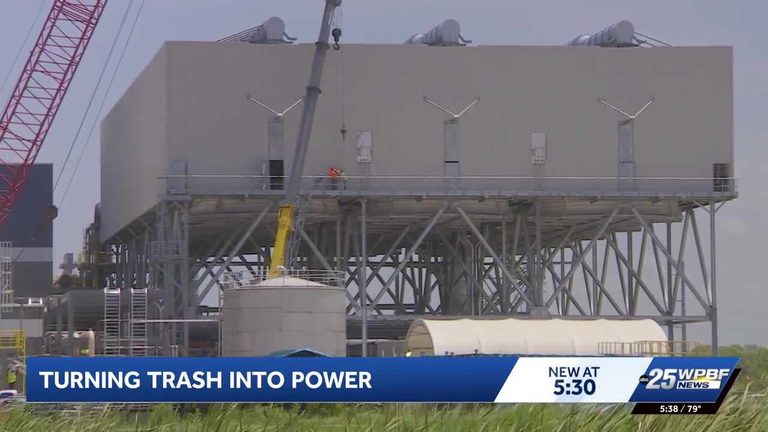
For over 30 years Palm Beach County has been converting municipal solid waste into clean electricity. The Solid Waste Authority (SWA) operates one of fewer than a dozen waste‑to‑energy facilities in Florida, and the plant now generates enough power to meet the Authority’s own needs and supply surplus electricity for an estimated 60,000 homes.
How the plant works
Trash is loaded into a large pit where overhead cranes stir and fluff the material to promote efficient burning. The waste is then fed into boilers whose walls are lined with water‑filled pipes. As the fire heats the water, steam is produced. That steam drives a turbine, which in turn spins a generator to create electricity. The electricity first powers the entire SWA campus; any excess is sold to Florida Power & Light.
Environmental benefits
Beyond generating power, the facility dramatically reduces the volume of waste sent to the county’s landfill—by roughly 90% by volume, according to Kyle Pinon, Director of Facility Contract Operations. The ash that remains is placed back into the landfill, extending its life until about 2071.
Air‑quality controls filter particulate matter and other pollutants before they leave the plant. The SWA reports that the facility’s emissions are about 90% below the limits set by the EPA. Water use is also minimized: after steam turns the turbine, it condenses back into liquid water and is pumped directly back into the boiler, creating a closed‑loop system that limits waste water discharge.
Why waste‑to‑energy matters in Florida
“In Florida, it’s very important for us to have waste energy as an available option because landfills are challenging here. The water table is so high that we can’t dig down to make a big hole,” Pinon explained. High land values and a shallow water table make traditional landfill expansion costly and environmentally risky. By turning trash into power, the county reduces reliance on new landfill space while providing a renewable‑energy source for the community.
Local impact
The plant’s output helps keep electricity rates stable for residents and supports the county’s broader sustainability goals. By supplying power to the SWA campus and selling the surplus, the Authority generates revenue that can be reinvested in other public‑service projects.
Community members have expressed support for the facility’s dual role of waste reduction and power generation. While some concerns have been raised about water usage, the plant’s closed‑loop system addresses those issues, and the SWA continues to monitor emissions to ensure compliance with state and federal standards.
Looking ahead
As Florida’s population grows, the demand for both waste management and reliable electricity will increase. The SWA’s waste‑to‑energy model offers a scalable solution that aligns with the county’s commitment to responsible stewardship of natural resources and fiscal prudence. By turning trash into a valuable asset, Palm Beach County demonstrates how local governments can innovate to protect the environment and serve their residents.
Original reporting: WPBF (Treasure Coast / Hearst) — read the source article.