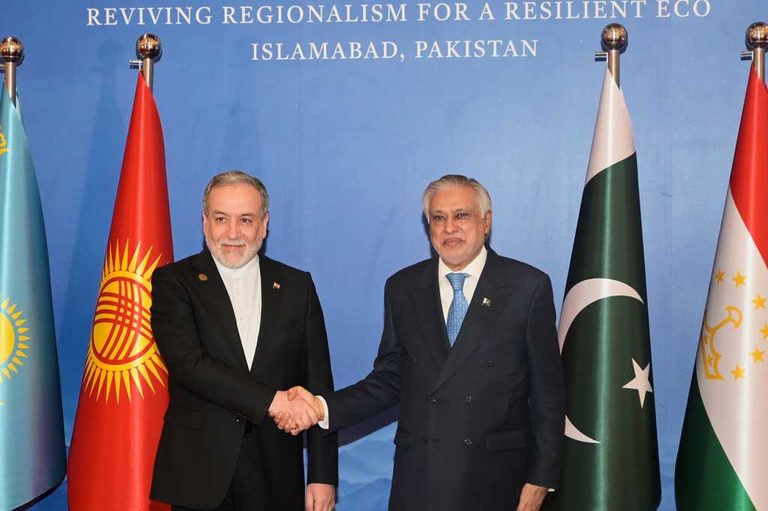
Islamabad – On Monday, Pakistan’s Foreign Minister Ishaq Dar used the Economic Cooperation Organization (ECO) summit to reaffirm Islamabad’s commitment to easing tensions between the United States and Iran. Speaking to a gathering of foreign ministers from the ten‑member bloc, Dar said the diplomatic effort has the backing of regional partners and is vital for stabilising trade routes and energy supplies.
US‑Iran diplomacy takes centre stage
Dar highlighted that Pakistan hosted the first direct talks between Washington and Tehran in April and that the two sides signed an interim agreement in June to halt hostilities in the Strait of Hormuz. He argued that continued dialogue will prevent further disruptions to oil shipments, which have already strained Pakistan’s already fragile economy.
Taliban’s role in regional security
The minister also warned that lasting peace with neighboring Afghanistan depends on the Taliban government’s willingness to curb terrorism. “Afghanistan must take concrete steps to stop the support of militant groups that threaten our borders,” Dar said, noting the absence of an Afghan delegation at the meeting.
Pakistan has repeatedly accused the Afghan Taliban of providing safe haven to the Tehrik‑e‑Taliban Pakistan (TTP), the outlawed Baloch Liberation Army, and al‑Qaida in the Indian Subcontinent. While Kabul denies these claims, Dar stressed that regional stability cannot be achieved without addressing these security concerns.
Iran’s diplomatic stance
Iranian Foreign Minister Abbas Araghchi echoed Dar’s call for cooperation, stating that Iran has upheld international law and pursued peaceful solutions for the past two years. He accused the United States of “aggression, threats, targeted assassinations, economic coercion, and blockades,” framing those actions as violations of the United Nations Charter and the U.N. Charter.
Araghchi’s remarks underscored Tehran’s view that U.S. policies in the Persian Gulf, including sanctions and naval posturing, have heightened insecurity in the region.
Economic implications for Pakistan
Dar warned that continued conflict and instability ripple beyond borders, disrupting trade routes, energy supplies, investment, and the economic projects that benefit ordinary citizens. He linked peace and development, saying, “Peace and development reinforce each other.”
Pakistan’s leadership, including Prime Minister Shehbaz Sharif and Army Chief Field Marshal Asim Munir, remain actively engaged with regional partners to facilitate diplomatic outcomes. The foreign minister pledged that Islamabad will keep pushing for dialogue, de‑escalation, and lasting stability.
Looking ahead
The ECO summit is expected to focus on expanding regional cooperation through stronger transportation links and trade agreements among members such as Turkey, Iran, Afghanistan, and several former Soviet republics. By fostering economic integration, the bloc hopes to create a more resilient regional market that can weather geopolitical shocks.
While the United States and Iran continue to navigate a delicate diplomatic path, Pakistan’s proactive stance at the ECO meeting signals a commitment to regional peace that aligns with the broader goal of economic prosperity for its people.
Original reporting: WPBF West Palm Beach — read the source article.