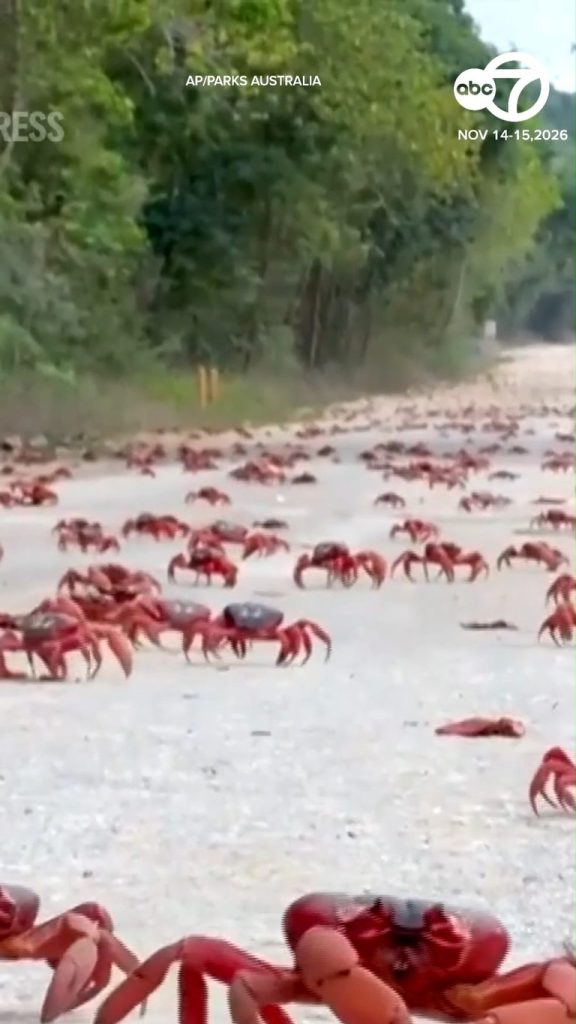
Christmas Island, Australia – The island’s iconic red crabs have started their yearly migration, a natural spectacle that draws attention from wildlife enthusiasts worldwide. Tens of millions of crabs are leaving the forested interior and heading toward the coastline to breed, a journey that coincides with the onset of the wet‑season rains.
Preparation by Parks Australia
In the months leading up to the migration, Parks Australia undertakes extensive preparations to ensure the safety of both the crabs and the island’s residents. Underpasses are cleared, dedicated crab bridges are erected, and kilometers of roadside barriers are installed. Specific road signs alert drivers to the timing of the migration and advise caution.
Timing and lunar coordination
The migration is tightly synchronized with the lunar cycle. According to Parks Australia, the crabs aim to spawn before dawn on a receding high tide during the moon’s last quarter. This timing maximizes the chances of successful breeding and reduces the risk of crabs being stranded by rising water.
Impact on the island
While the migration is a natural wonder, it also presents logistical challenges. Roads can become temporarily blocked, and drivers are urged to follow the posted signs and reduce speed in affected areas. The crab bridges, which span busy thoroughfares, allow the insects to cross safely without disrupting traffic flow.
Local businesses and residents have grown accustomed to the annual event, often planning around the migration period. Some tourism operators offer guided tours, providing visitors with a close‑up view of the crabs’ journey while emphasizing the importance of respecting the wildlife.
Conservation significance
The red crab migration is not only a cultural hallmark for the island but also a critical component of its ecosystem. The crabs play a vital role in nutrient cycling, transporting leaf litter from the forest to the beach. Their mass movement helps maintain the health of both terrestrial and marine environments.
Park officials continue to monitor the migration closely, using the data to improve future road‑safety measures and to assess the health of the crab population. Their ongoing efforts aim to balance human activity with the preservation of this unique natural event.
Original reporting: Brookhaven News – ABC7 New York — read the source article.