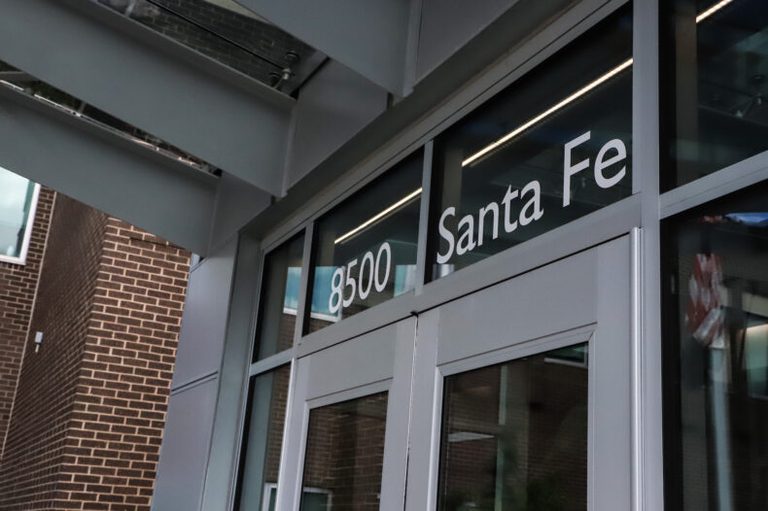
Overland Park officials are looking ahead to the next decade as the city prepares to relocate its municipal headquarters from the historic 1960s City Hall near Antioch Road and Santa Fe Drive to a new, centrally‑located facility on College Boulevard. The move, slated for full operation in 2034, will leave the current City Hall and the neighboring Myron Scafe building—home to additional city offices and a northern police station—empty and awaiting a long‑term plan.
Grant‑backed corridor study to shape the future
The city has secured just under $100,000 from the Mid‑America Regional Council’s (MARC) Planning Sustainable Places grant program to conduct an 87th Street Corridor Study. The study will examine roughly a one‑and‑quarter‑mile stretch from the city’s western limits to Antioch Road, where 87th Street becomes Santa Fe. While the primary focus is multimodal transportation—transit, pedestrian pathways, and bicycle access—the grant application also includes the soon‑to‑be‑former City Hall site for consideration.
“Particularly with the potential redevelopment of this area with the new city hall moving, we thought this would be a good time to look at this area,” said Erin Ollig, Overland Park’s strategic planning manager, during a May Community Development Committee meeting.
Current use of the Scafe building and police unit
The Scafe building currently houses a police training facility and other city departments. The Overland Park Crisis Action Team (OPCAT), the police department’s mental‑health behavioral unit, has been operating out of a leased private office for about five years while the city planned a new Police Training Facility at the W. Jack Sanders Justice Center. That facility’s opening would free space at Scafe for OPCAT, but with the future of the Scafe building still uncertain, city officials have paused the relocation.
“Rather than move forward with the plan to move them to the basement of a building that is uncertain, Police Chief Doreen Jokerst and I decided to hit the pause button on that,” facilities director Tony Rome explained at the October Public Safety Committee meeting. “There are a lot of moving pieces, and we’ll really evaluate what we’re going to do with these two buildings.”
Past MARC grant projects inform the process
Overland Park has a track record of using MARC’s Planning Sustainable Places grants to guide major projects. In 2017, a grant helped develop the Clock Tower Landing district around the Farmers’ Market as a transportation and entertainment hub. Subsequent studies in 2023 and 2024 addressed the 79th Street corridor, leading to an aspirational plan that emphasizes pedestrian‑ and bicycle‑friendly design. Earlier grants funded a Downtown Parking Plan (2013), the Vision Metcalf addition (2017), and the College/Metcalf Walkability Study (2021).
City spokesperson Meg Ralph emphasized that while the corridor study will include the current City Hall site, it is not the primary focus. “We’re not expecting it to be the focus or to make a final recommendation for the building’s future,” she told the Post. “The main goal is to look at multimodal transportation options, but land use will also be examined.”
Looking ahead
Rome predicts a more detailed review of the City Hall and Scafe properties will likely occur around 2029 or 2030, though the exact timing remains a forecast. In the meantime, the existing facilities will continue operating as they have, while the city monitors lease expirations at the future College Boulevard campus.
The corridor study, funded by the MARC grant, is expected to provide a data‑driven foundation for any future redevelopment, ensuring that Overland Park’s growth aligns with transportation needs, community values, and responsible land use.
Original reporting: Johnson County Post (Overland Park) — read the source article.