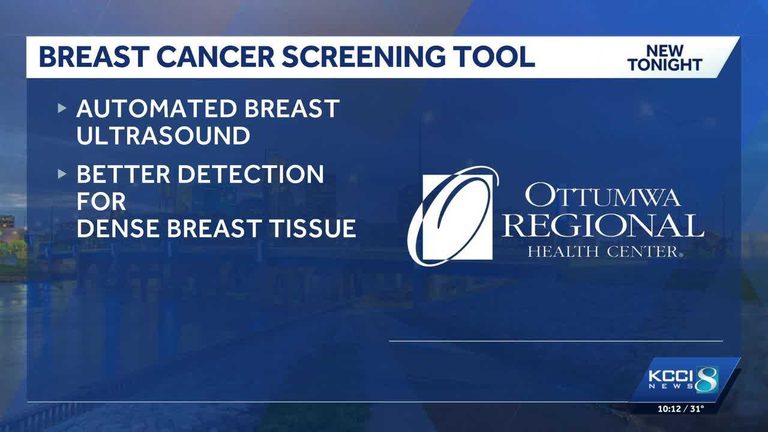
Ottumwa Regional Health Center announced today that it will begin offering automated breast ultrasound (ABUS) to women with dense breast tissue. The technology provides a non‑invasive, ultrasound‑based exam that can detect tumors that mammography sometimes misses in dense breasts.
Why ABUS matters for women in Ottumwa
Dense breast tissue can mask the appearance of tumors on standard mammograms, reducing the effectiveness of the gold‑standard screening method. ABUS is designed specifically for asymptomatic women whose breast density makes cancer harder to spot. By sending sound waves through the tissue, the system creates detailed images that help radiologists identify suspicious areas.
“Mammography remains the gold standard for the detection of breast cancer; however, it doesn’t work equally well in all women,” said Lisa Garrison, director of imaging, radiation oncology, and cardiac cath lab at the health center. “We believe ABUS will become an integral part of our practice for the detection of breast cancer, and we are hopeful that this new service can provide added peace of mind for our patients and their providers.”
Local impact and regional distinction
The health center noted that it is the only hospital in the region offering this advanced screening option. Residents of Ottumwa and surrounding communities will no longer need to travel to larger metropolitan areas for the technology, keeping care close to home and supporting local families.
According to the Iowa Cancer Registry, breast cancer is the second most common cancer in the state, with an estimated 3,050 Iowans expected to be diagnosed this year. The disease accounts for 14.1% of new cancer cases, and the registry projects roughly 380 breast cancer deaths in 2026. Early detection remains the most effective way to improve survival rates, and the addition of ABUS gives physicians another tool to catch cancer at its earliest stages.
How ABUS works
During an ABUS exam, a technician places a specialized transducer over the breast. The device automatically captures a series of three‑dimensional images without requiring the patient to hold still for extended periods. Radiologists then review the images on a computer workstation, looking for any abnormal structures that merit further investigation.
Because the exam is automated, it reduces operator variability and can be performed quickly, often in less than 15 minutes. The procedure is painless, does not involve radiation, and can be scheduled alongside routine mammography appointments.
Guidelines and next steps
The American Cancer Society recommends that women begin yearly mammograms at age 40. For those with dense breast tissue, the Society advises discussing supplemental screening options with a health‑care provider. Ottumwa Regional Health Center encourages eligible patients to speak with their physicians about whether ABUS is appropriate for them.
Appointments for the new service are now open, and the health center plans to expand availability as demand grows. Community members seeking more information can call the imaging department or visit the hospital’s website.
Original reporting: KCCI Des Moines — read the source article.