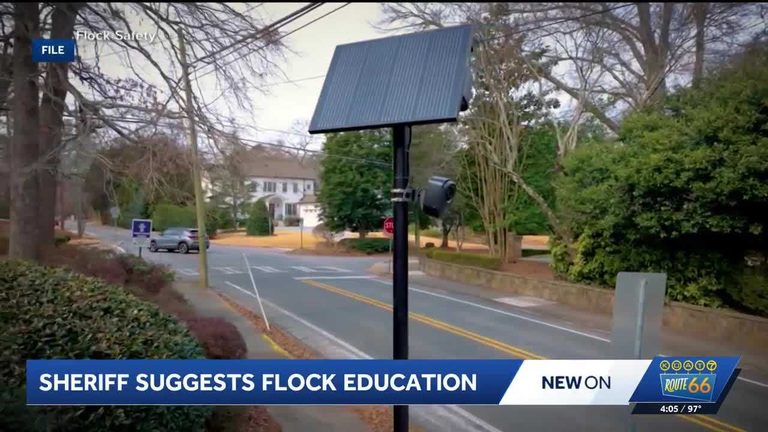
At a recent Otero County Commission meeting, Sheriff David Black asked the technology company Flock to provide a public education session on its license‑plate reader system that has been installed throughout the city of Chaparral. The sheriff emphasized that the devices are limited to reading vehicle plates and do not capture facial images, audio, or other biometric data.
Commission hearing and community concerns
Commissioners received a number of complaints from residents who feared the new cameras could be used for broader surveillance. In response, Sheriff Black told the board, “Some of the stuff they believe the cameras are doing, they’re not. As far as recording facial recognition, recording speech, voices … they’re reading license plates, and that’s it.” He said the sheriff’s office would work with Flock to ensure the public understands the technology’s capabilities and limitations.
Background on Flock’s license‑plate readers
Flock is a national supplier of automated license‑plate readers (ALPRs) used by law‑enforcement agencies. The devices capture images of passing vehicles and automatically compare plate numbers against law‑enforcement databases. While the technology can aid investigations, it has drawn scrutiny from privacy advocates who argue that widespread deployment could create a de‑facto surveillance network.
Recent actions in the region illustrate the mixed response to the technology. The city of Taos voted to defund its Flock cameras, redirecting the funds to other municipal priorities. Conversely, the Navajo Nation announced plans to expand Flock cameras across its 27,000‑square‑mile jurisdiction, citing hopes that the equipment will generate leads in missing‑person cases and improve response times in remote areas.
Next steps for Chaparral
Sheriff Black’s request for a public education session reflects a growing trend among local officials to address privacy concerns head‑on rather than simply removing the equipment. The sheriff indicated that a Flock representative would be invited to present at a future commission meeting, answer questions, and provide documentation on data retention policies.
Residents are encouraged to submit written questions ahead of the session. The commission plans to schedule the briefing within the next month, pending coordination with Flock’s regional office.
Implications for local law‑enforcement transparency
By seeking an open dialogue, Otero County officials aim to balance public‑safety benefits with constitutional privacy protections. The sheriff’s stance underscores the importance of clear communication between law‑enforcement agencies and the communities they serve, especially when new surveillance tools are introduced.
Original reporting: KOAT Albuquerque — read the source article.