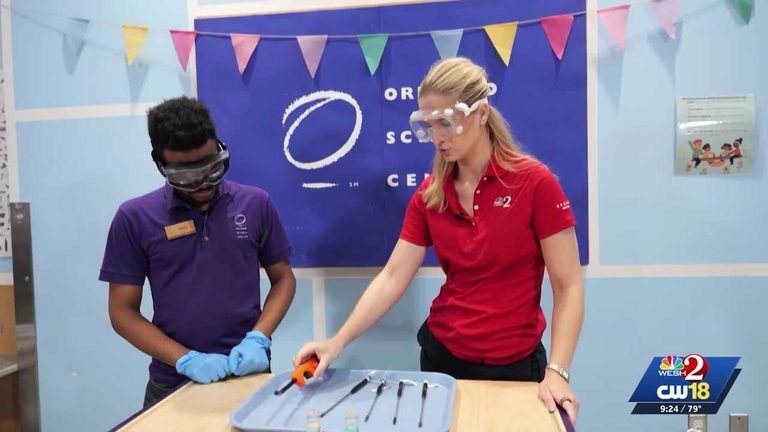
ORLANDO, Fla. — Families and science enthusiasts gathered at the Orlando Science Center this week for a hands‑on demonstration that turned ordinary fire into a rainbow of hues. Meteorologist Victoria Wisniewski, a local science communicator, used basic elements from the periodic table to illustrate how different chemicals alter the color of a flame.
How the colors are created
Wisniewski explained that when a metal salt is introduced to a flame, the heat excites the electrons in the metal atoms. As the electrons return to their normal state, they release energy in the form of light. The specific wavelength of that light determines the color we see. For example, adding copper chloride produces a bright green flame, while strontium chloride yields a vivid red.
Interactive learning for all ages
The demonstration was part of the Science Center’s “Science of It” series, which aims to make complex scientific concepts accessible to the public. Children were invited to suggest which element to test next, and Wisniewski safely mixed small amounts of the salts with a controlled propane torch. Safety precautions, including fire‑resistant gloves and goggles, were emphasized throughout the session.
Visitors left the exhibit with a deeper appreciation for chemistry’s role in everyday phenomena—from fireworks to the colors seen in a campfire. The Center plans to repeat the demonstration during future school‑holiday programs, reinforcing STEM education in a fun, hands‑on environment.
Supporting local STEM education
Orlando’s growing tech and aerospace sectors benefit from a pipeline of students who are excited about science early on. By offering engaging experiences like the fire‑color demo, the Orlando Science Center helps nurture the next generation of engineers, chemists, and innovators who will contribute to the region’s economic vitality.
Admission to the Science Center is $22 for adults and $18 for children ages 3‑12, with discounted rates for members and school groups. The Center’s calendar lists additional workshops on robotics, astronomy, and environmental science throughout the fall.
Original reporting: WESH Orlando — read the source article.