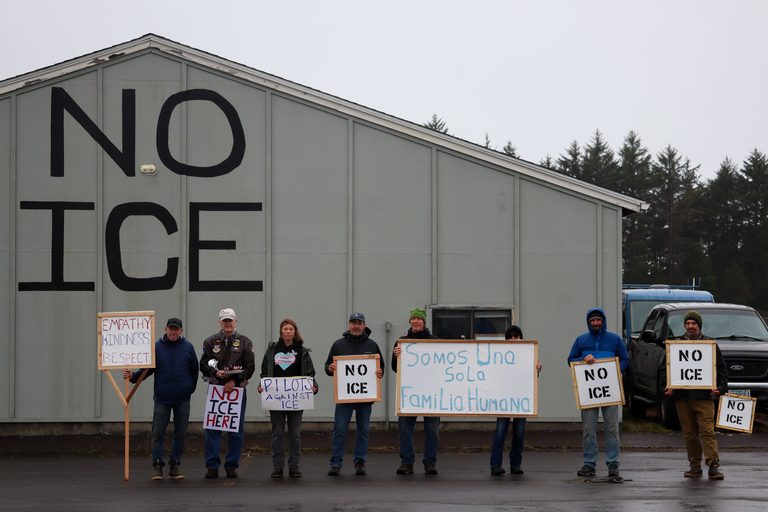
In a decisive win for Oregon’s coastal communities, U.S. Immigration and Customs Enforcement (ICE) has agreed to abandon its plan to build a detention center at Newport’s municipal airport. The agreement, filed Friday, Oct. 23, in the U.S. District Court for the District of Oregon, ends nearly a year of uncertainty for residents, local businesses, and wildlife advocates.
State and local leaders celebrate the outcome
Oregon Attorney General Dan Rayfield issued a statement declaring, “Oregon stood up, we made the federal government answer for its plans in court, and now they have to follow the law.” Rayfield’s office released the news under the headline, “ICE abandons detention center, no plans anywhere in Oregon.” The ruling is the culmination of a consolidated lawsuit filed by the state, the city of Newport, and two environmental groups – Oregon Shores Conservation Coalition and Cascadia Wildlands.
Legal challenges focused on civil rights and the environment
The lawsuit argued that the proposed facility would violate civil‑rights protections, impose economic burdens on the region, and threaten endangered species. Specifically, the plaintiffs cited the Endangered Species Act, warning that construction could harm the threatened western snowy plover and marbled murrelet that nest along the coast. The case also highlighted the importance of the Coast Guard helicopter stationed at Newport Airport, a critical asset for the local crabbing and fishing industry.
Local impact and broader implications
Newport city leaders first learned of the limited detention‑center proposal in November of last year. The plan prompted the removal of the Coast Guard helicopter to nearby North Bend, a move later reversed by a separate federal order after Rayfield’s office intervened. Community members and environmental advocates rallied loudly against the project, describing it as “reckless and inhumane.” Cascadia Wildlands executive director Josh Laughlin called the settlement “a huge victory for the people of Oregon and our shared environment,” adding that the case could serve as a template for other states seeking to block similar facilities.
Future requirements for ICE
Under the stipulated order, the Department of Homeland Security must notify the plaintiffs before taking any further steps toward a detention facility in Oregon through Aug. 1, 2027. This notification requirement gives the state and its partners a clear window to challenge any future proposals that might arise.
Why this matters for Oregon families
The decision protects coastal families from a project that many feared would strain local resources, increase traffic, and potentially expose the community to heightened security concerns. By preserving the airport’s existing role in supporting the fishing industry, the ruling safeguards jobs that many families rely on for their livelihood.
Looking ahead
While the federal government retains authority over immigration enforcement, the Oregon case demonstrates how state and local leaders can use the courts to enforce environmental and civil‑rights statutes. It also underscores the power of coordinated action among government, community groups, and concerned citizens.
For now, Newport residents can breathe easier knowing that the coast remains focused on its traditional industries—fishing, tourism, and conservation—rather than on a controversial detention facility.
Original reporting: Homepage – Lookout Eugene-Springfield — read the source article.