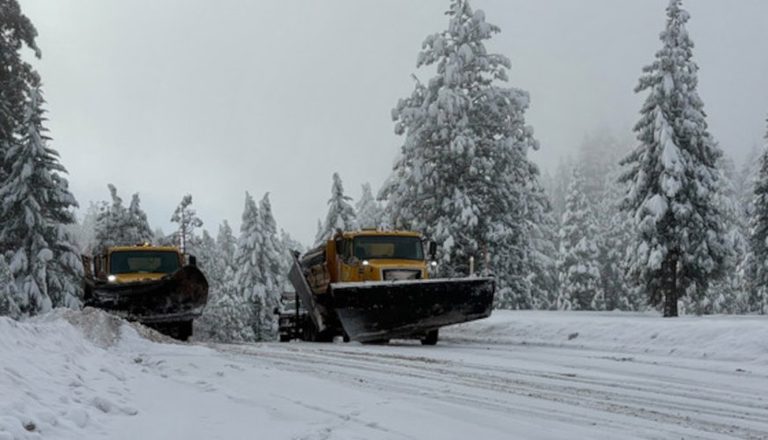
OREGON — The Oregon Department of Transportation (ODOT) is preparing for the upcoming winter with its smallest workforce in nearly three decades. Compared with 1999, the agency now employs roughly 15% fewer staff, leaving about 700 critical positions unfilled across snow removal, bridge repair and driver services.
Funding shuffle keeps winter operations afloat
Earlier this year, state lawmakers reallocated money from programs such as Connect Oregon, Safe Routes to School and bridge preservation initiatives. The redirected revenue provides temporary financial stability through 2027, allowing ODOT to hire essential maintenance workers for the winter season while longer‑term transportation funding remains uncertain.
Years of budget cuts have shrunk the agency
Since 2019, ODOT has cut spending by more than $500 million to stay within limited funding. The agency has also faced a wave of staff departures, potential layoffs and hiring freezes. To keep highway service levels, officials have introduced technical innovations, including self‑service online tools for drivers and truckers.
Office space and management reductions save money
ODOT shifted many office staff to partial remote work, shrinking its office footprint by over 225,000 square feet and saving more than $3 million a year in lease costs. The department also eliminated several management positions and reduced the size of highway maintenance crews.
Interim director stresses commitment despite cuts
ODOT Interim Director Chris Warner praised employees for adapting to a leaner workforce, but warned that service reductions are becoming unavoidable. “ODOT’s ability to manage Oregon’s multimodal transportation system, even with 700 fewer people, is a testament to the agency’s commitment to efficiency,” Warner said. “We are starting to see signs that low staffing levels are reducing services for Oregonians, but ODOT will continue to look for efficiencies.”
Rural communities feel the impact
Staffing shortages are already affecting small towns and rural areas, where DMV offices are frequently forced to close. Smaller maintenance crews have made tasks such as asphalt paving and roadside debris cleanup less safe for workers and drivers. The reduced workforce also strains emergency response capabilities during severe weather and natural disasters. During the summer wildfire season, ODOT personnel logged hundreds of overtime hours to protect travelers, and officials warned that simultaneous fires could force unmonitored road closures.
Long‑term funding challenges remain
Warner highlighted the scale of ODOT’s responsibilities: more than 18,000 lane miles of highway and about 2,800 bridges across Oregon, a state whose population has grown significantly since 1997. “Even with 15% fewer employees, ODOT is up to the challenge. But if the agency continues to shrink, it will be hard for us to deliver the transportation system and services Oregonians expect and deserve,” he said.
Department leaders attribute the persistent shortfall to a structural revenue crisis caused by declining gas‑tax revenues, high inflation and legal restrictions on how state transportation dollars can be spent. Without new legislative action to secure dedicated funding for maintenance and operations, ODOT may need to cut hundreds of additional jobs by the end of 2027 to balance its budget.
Original reporting: KTVZ (Central Oregon) — read the source article.