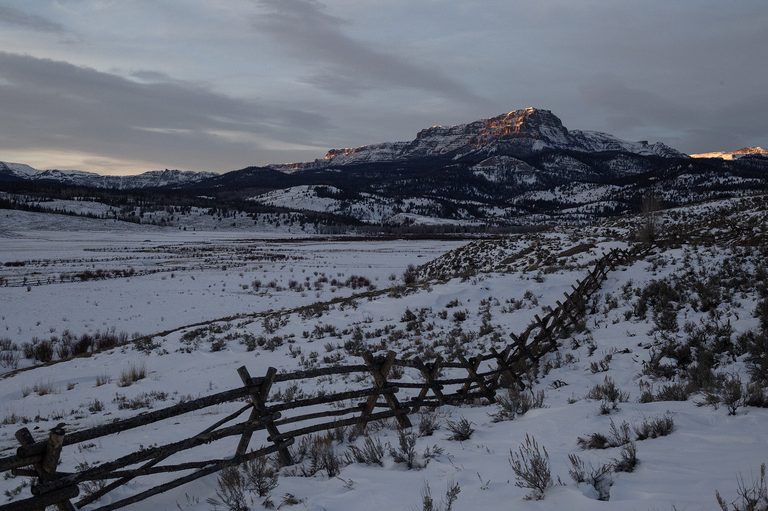
Dubois, WY – After decades of economic hardship, the small town of about 1,000 residents has found new vitality in tourism, hunting, fishing and outdoor recreation. That same natural bounty is now at risk, says longtime rancher Budd Betts, a former state legislator who owns Absaroka Ranch.
Proposed lease auction threatens wildlife corridors
Wyoming Energy Consultants, a Casper‑based firm, submitted expressions of interest for nearly 70,000 acres across 38 parcels in the Shoshone National Forest. The parcels represent more than 55% of the acreage slated for the Bureau of Land Management’s June 2027 oil and gas lease auction.
The land in question includes critical habitat for the 7,000‑animal Wiggins Fork elk herd and the 4,000‑animal Dubois mule‑deer herd, which is renowned for trophy bucks. An analysis by Wilderness Society employee Nick Dobric shows that roughly 19,500 acres of the proposed leases overlap the Upper Wind River mule‑deer migration corridor, including over 3,000 acres of high‑use habitat and 5,400 acres of stop‑over areas.
Local voices call the plan inconsistent with community values
“It’s just not consistent with where this community is heading,” Betts told WyoFile. “I’m not speaking as some kind of ‘refuse to oil and gas’—in my time in the Legislature I supported our state’s energy industry, but this area is not appropriate for drilling.”
Retired Diamond G Ranch manager Jon Robinett echoed the concern, noting that the forest serves as a major summer thoroughfare for elk, deer, antelope, bears and other wildlife. He warned that road building for exploratory wells would open the area to public traffic, harming recreation and hunting.
Jeremy Prine, whose family has run the Ram’s Horn Ranch for nearly eight decades, said he uses oil‑and‑gas products daily but opposes leasing the national forest’s wildest sections. “A lot of those places are starting to disappear,” he said.
Historical context and regulatory backdrop
In 2024, the Wyoming Game and Fish Department identified the migration corridor but did not designate it under state policy, citing insufficient threats at the time. The proposed leases would be among the first to target national‑forest lands in Wyoming, a fact that Game and Fish habitat‑protection supervisor Will Schultz described as a “unique situation.”
Without a formal designation, the department can only advise the BLM to avoid surface disturbance in high‑use areas. If the corridor had been designated, lease agreements could include protective stipulations, but that option was not pursued.
Public comment period open
The BLM is accepting public comments on the proposed leases through November 27. Local stakeholders, wildlife groups and concerned citizens are encouraged to submit their views, emphasizing the importance of preserving the region’s wildlife corridors and recreational values.
While the BLM may drop the 39,000 acres that fall within the 2015 Shoshone forest‑plan closure, another 30,200 acres remain in zones deemed suitable for leasing, including portions of the migration corridor.
Why the opposition matters
Dubois relies heavily on tourism and outdoor recreation for its economic resurgence. The town’s hunting season this fall saw 3,834 applicants for just 60 elk licenses, a 1.5% draw rate, underscoring the high demand for limited wildlife resources. Protecting the habitat aligns with the community’s long‑term economic and cultural interests.
Ranchers like Betts, Robinett and Prine stress that the Upper Wind River Valley has some of the lowest oil‑and‑gas potential in the state, making the proposed leases appear puzzling and unnecessary.
As the lease auction approaches, the Dubois community hopes its voice will help steer federal land‑use decisions toward preserving the natural heritage that defines the region.
Original reporting: Oil City News (Casper WY) — read the source article.