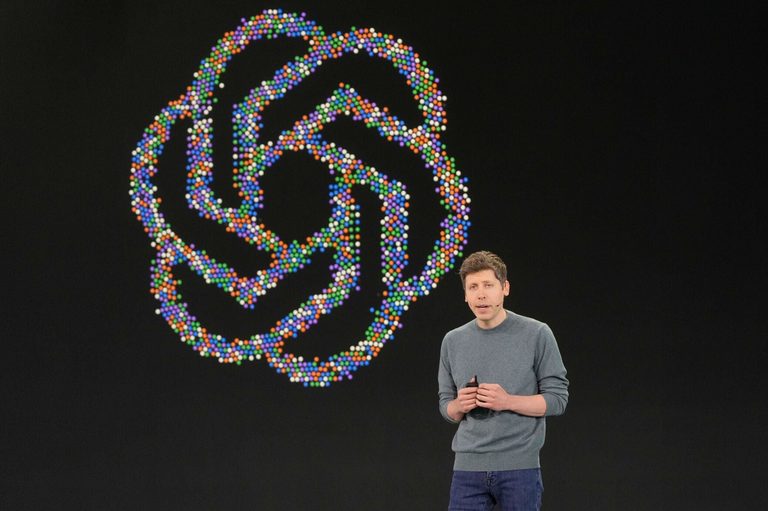
At the OpenAI developer conference on Tuesday, CEO Sam Altman announced the company’s newest product line – the “Dots” AI agents – described as a “remarkably capable, always‑on” helper that proactively completes tasks for users. The launch comes just one day after OpenAI paused the rollout of a more advanced model, citing internal safety concerns raised by its own researchers.
Always‑on agents designed for everyday use
Altman said the Dots agents are intended to act like a personal assistant that “always has your back,” drawing inspiration from the helpful AI characters seen in classic movies. The agents will operate continuously, monitoring user needs and completing tasks without prompting. Altman framed the technology as a tool to empower individuals, giving them more control over their lives and expanding opportunities for learning, creation, and discovery.
Safety focus reinforced after model pause
OpenAI’s decision to hold back the newer model reflects a broader industry call to slow the pace of AI advancement until safety measures catch up. While Altman did not address the shelved model directly in his keynote, he answered questions by emphasizing increased investment in safety, security, and monitoring for AI agents.
President Trump’s voluntary AI safety accord
In a parallel development, President Donald Trump hosted leaders from six major AI companies, including OpenAI, Anthropic, Amazon, Nvidia, Tesla/SpaceX, and Microsoft, at the White House. The participants signed a voluntary agreement to “self‑police” AI development. The pact outlines three key commitments: implementing robust internal controls, partnering with an independent external auditor to verify those controls, and establishing a board‑level committee to review audit findings.
While many Silicon Valley voices have urged the federal government to impose formal guardrails on AI, President Trump has consistently pushed back against additional regulatory oversight, preferring industry‑led standards and accountability.
Industry reaction and future outlook
OpenAI also announced the release of GPT‑6.1 Sol, an upgraded version of its GPT‑6 Sol model, and introduced a premium speed tier called “Ultrafast.” These product launches signal the company’s confidence in moving forward responsibly, even as it balances innovation with heightened safety protocols.
Altman likened the current AI boom to a renaissance rather than an industrial revolution, arguing that AI should not turn people into “cogs in a giant machine” but should instead provide tools that enhance human agency. He warned that certain aspects of life should remain beyond automation, underscoring the need for thoughtful limits.
What this means for users and the broader tech landscape
The introduction of always‑on agents could reshape how individuals interact with digital tools, offering continuous assistance in both personal and professional contexts. At the same time, the Trump‑led safety accord represents a notable step toward establishing industry standards without heavy-handed government regulation.
Stakeholders will be watching how the voluntary framework is enforced and whether it can keep pace with rapid AI advancements. For now, OpenAI’s new agents and the presidential agreement together illustrate a dual focus on innovation and responsibility in the evolving AI ecosystem.
Original reporting: KTBS 3 (Shreveport) — read the source article.