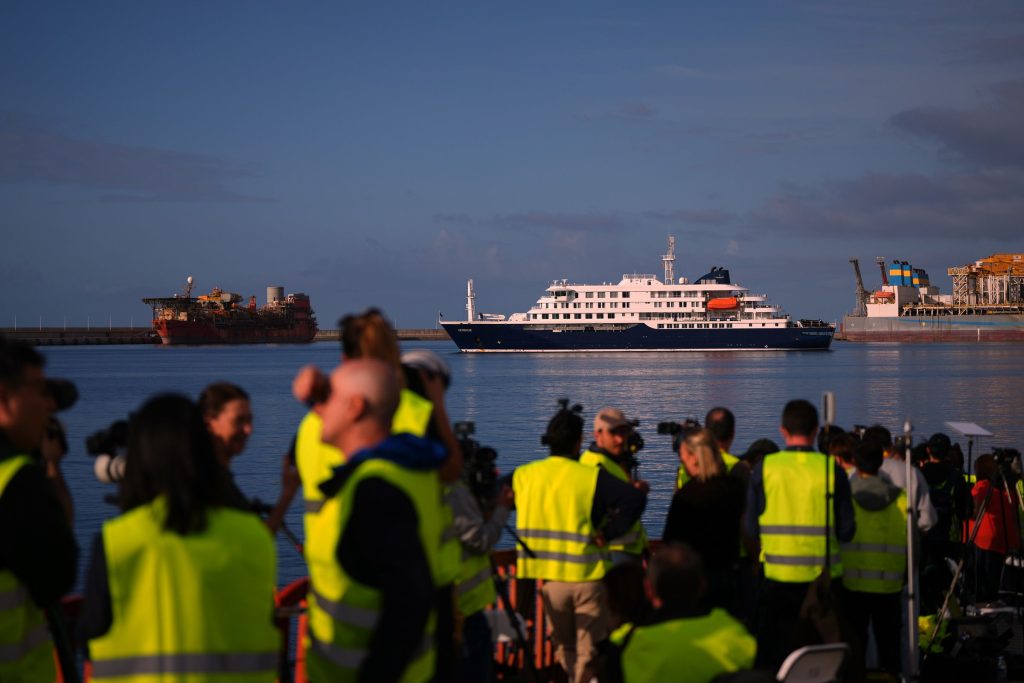
Canada is tracking a potential hantavirus case tied to a recent cruise that docked in Tenerife, Spain. One of four Canadian passengers who returned from the voyage has a “presumptive positive” test for hantavirus, and confirmation is pending at the National Microbiology Lab in Winnipeg. The ship involved was the MV Hondius, which arrived at the port of Granadilla in Tenerife, and Canadian officials said they expect lab results over the weekend.
Health authorities in Canada are treating the matter seriously while keeping details limited to avoid needless alarm. Officials say four Canadians returned from the same cruise and were tested after reports of an outbreak aboard the vessel. One of those four now has a “presumptive positive” result, and public health teams are following standard protocols to trace contacts and monitor anyone at risk.
The next step is a definitive test at the National Microbiology Lab in Winnipeg, where more specialized assays can confirm hantavirus infection. Canadian officials said the confirmation results are expected to come over the weekend, a timeline that reflects both lab capacity and the careful steps needed to verify a finding. Until those results arrive, patient status and specific clinical details are being held by local health units to protect privacy.
The cruise ship in question, the MV Hondius, made headlines when it arrived at the port of Granadilla in Tenerife and was linked to the outbreak. Port and maritime authorities in Tenerife handled the vessel’s arrival and the immediate on‑site response, while Canadian public health agencies coordinated follow-up once passengers returned home. That split of responsibilities is common in international voyages where passengers disembark in different countries.
Public health officials emphasize that a “presumptive positive” is an important signal but not the final word. Preliminary tests can pick up markers that strongly suggest infection, yet laboratory confirmation is needed to remove uncertainty. The Winnipeg lab has the reference capacity to run confirmatory tests that are more specific, and officials want those results before making definitive public health declarations.
For passengers and their families, the waiting period is understandably stressful, and officials have urged calm and cooperation. Local health units are reaching out to those identified as close contacts to assess symptoms and provide guidance on isolation when warranted. The approach balances rapid response with careful confirmation so that any measures taken are appropriate to the confirmed risk.
International travel and communal settings like cruise ships pose unique challenges for disease detection and response. A single symptomatic person can generate concern for many, and ships often require coordination across flags, ports, and home countries to manage testing, treatment, and notification. In this case the MV Hondius’ route and docking at Granadilla in Tenerife created a cross-border issue that brought Canadian labs and public health officials into the loop once passengers returned home.
Officials have not released personal medical details, but they have been clear about the process and the expected timeline for confirmation. The emphasis on lab verification at the National Microbiology Lab in Winnipeg reflects how public health systems use reference testing to confirm early results. Until confirmation is complete, authorities will continue contact tracing and monitoring, and they will update the public if the situation changes.