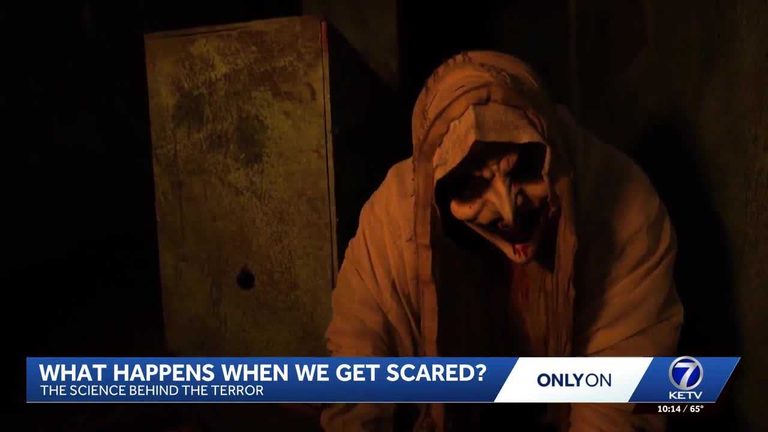
When Connor Schmidt, a reporter for sister station KETV, walked through three of Omaha’s most popular haunted attractions, his smartwatch turned into a live laboratory for the science of fear. By measuring his heart rate before, during and after the scares, the experiment highlighted how the body’s stress response works and why many people seek out the thrill of a controlled fright.
Heart‑rate spikes at Scary Acres, Haunted Castle and House on the Hill
Schmidt’s baseline heart rate was about 85 beats per minute (bpm) as he approached Scary Acres, a family‑friendly haunt on the outskirts of Omaha. Once inside, the rhythm climbed to at least 115 bpm, a clear sign that the nervous system had shifted into “fight‑or‑flight” mode. The Haunted Castle pushed his pulse even higher, reaching 124 bpm, while the House on the Hill settled at 119 bpm.
“It’s an immersive experience,” explained Angela, the owner of Scary Acres. “From the moment you walk through the gates until you exit, we aim to transport you into a horror‑genre frame of mind.” The data confirmed that the atmosphere—chainsaws, screams and costumed actors—does exactly what the owners intend: it triggers a rapid physiological response.
Why the body reacts so quickly
Dr. Harmit Singh of Creighton University School of Medicine described the underlying mechanism. “Whenever there’s a stressful situation, our brain responds instantaneously,” he said. “Our brain is wired for our stress response because it’s our alarm system.” The brain releases adrenaline, which raises heart rate, tightens muscles and sharpens focus, preparing the body for rapid action.
Even though these reactions are designed for genuine danger, they can be enjoyable in a safe setting. “People can enjoy being scared when they know they’re in a controlled environment,” Dr. Singh added. The knowledge that the threat is staged allows the brain to reap the adrenaline rush without actual risk.
Local appeal of controlled scares
Omaha’s haunted attractions have become a seasonal staple, drawing families, teenagers and thrill‑seekers alike. Lucas Williams, a scare actor and acting coach, noted that simple props can be especially effective. “You can’t beat a chainsaw,” he said. “Grab the chainsaw. It’s the easiest thing to scare you.”
Beyond entertainment, the experience offers a glimpse into how stress hormones can be harnessed for positive outcomes. Some fitness programs incorporate controlled stressors—like high‑intensity interval training—to trigger similar hormonal responses that improve stamina and mental resilience.
What the data means for visitors
For those curious about their own reactions, a smartwatch or fitness tracker can provide real‑time feedback. Observing a heart‑rate increase of 30‑40 bpm during a scare is normal and indicates the body’s natural alarm system at work. Knowing this can help visitors appreciate the physiological dance between fear and excitement.
As Halloween approaches, Omaha’s haunted houses continue to offer a safe venue for residents to explore the edge of fear, learn about their own bodies and enjoy the adrenaline‑filled fun that comes with a well‑crafted fright.
Original reporting: WLWT Cincinnati — read the source article.