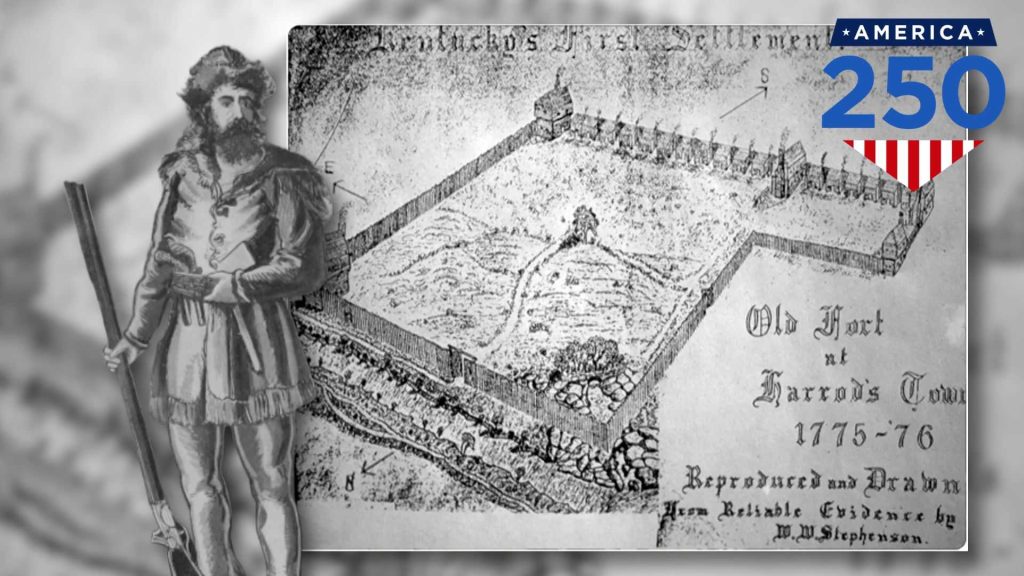
As America approaches its 250th anniversary, the story of its westward expansion is brought to life at Old Fort Harrod State Park in Harrodsburg, Kentucky. This site marks the first European settlement west of the Allegheny Mountains, a pivotal moment in the nation’s history.
The Beginnings of Westward Expansion
Before the Declaration of Independence, pioneers like James Harrod sought freedom from British rule by venturing westward. In 1774, Harrod, along with 32 men, established Fort Harrod, bringing with them essential tools and supplies to build and sustain the fort.
Julius Lane, a historical interpreter at the park, explains that the settlers aimed to live off the land without the burden of British taxes. This drive for autonomy and self-sufficiency was a key motivator for many early settlers.
Challenges and Resilience
The settlers at Fort Harrod faced significant challenges, particularly in 1777, known as the ‘Bloody Sevens,’ due to frequent attacks by Native American tribes such as the Shawnee. Despite these threats, the fort remained intact, never being burned or abandoned.
Lane emphasizes the importance of Fort Harrod’s success, suggesting that without it, the concept of westward expansion might have faltered, potentially leaving the United States confined to the original 13 colonies.
Legacy and Education
Today, Old Fort Harrod State Park serves as a living history lesson, reminding visitors of the hardships and triumphs of early American settlers. Park manager Autumn Morrison highlights the importance of understanding this history, noting how it shapes our appreciation for the freedoms and opportunities we enjoy today.
The park stands as a symbol of the pioneering spirit that helped shape the nation, offering insights into the determination and resilience that fueled America’s growth.
Original reporting: WLKY Louisville — read the source article.