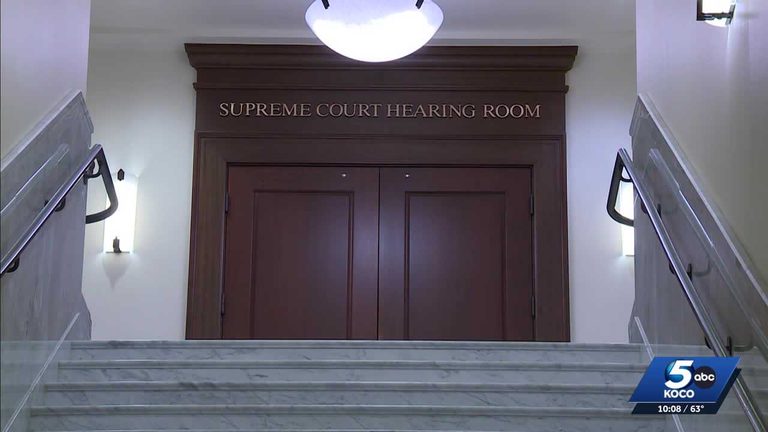
Oklahoma voters will decide on Nov. 3 whether to approve State Question 845, a constitutional amendment that would reshape the Judicial Nominating Commission (JNC). The measure proposes three key changes: eliminating caps on how many members each political party may have, extending a member’s term to 12 years, and removing the current limit of six attorneys on the 15‑member commission.
What the amendment would change
Under the present system, only six of the JNC’s seats are filled by attorneys elected by the Oklahoma Bar Association. The amendment would allow the governor to appoint any number of attorneys – or relatives of attorneys – to fill the seats he selects, effectively removing the Bar‑association‑only restriction.
In addition, the amendment would permit the commission to be composed entirely of members from one party, should the governor’s appointments reflect a single partisan slate. Finally, a commission member could serve up to 12 years, up from the current term limits.
Supporters argue for broader legal input
State Sen. Julie Daniels, the Senate majority floor leader, praised the measure, saying, “I’m really excited about letting more attorneys serve and letting the relatives of attorneys serve, because attorneys come in all different kinds, and I believe we need to broaden that perspective.” Daniels contended that the existing Bar‑association‑only rule limits participation to a relatively elite group and that opening the commission could democratize the selection of judges.
Policy analyst Cole Allen echoed the historical purpose of the JNC, noting that it was created in 1967 to reduce political corruption in the Supreme Court’s selection process. Allen suggested that expanding attorney representation could modernize the commission while still preserving its original intent to keep the judiciary insulated from overt political pressure.
Opponents warn of potential conflicts
State Sen. Julia Kirt, the Senate minority leader, expressed concern that the amendment could create conflicts of interest. “My big worry is you get people who are picking the judges who are going to turn around and practice law in that same courtroom,” Kirt said. She argued that the existing protections were designed to prevent corruption and that removing them could open the door to undue influence.
Critics also point out that allowing the governor to appoint an unlimited number of attorneys could concentrate power in the executive branch, potentially undermining the bipartisan balance the current system strives to maintain.
What voters need to know
State Question 845 will appear on the November 3 ballot. A “Yes” vote would adopt the proposed changes, while a “No” vote would keep the current constitutional structure intact. Voters can find sample ballots, polling locations, and absentee voting information on the Oklahoma State Election Board website.
The debate over SQ 845 reflects a broader conversation about how best to ensure a fair, transparent, and competent judiciary. Supporters see the amendment as a step toward greater inclusion of qualified legal professionals, while opponents fear it could erode safeguards against partisan or personal bias.
Regardless of the outcome, the measure underscores the importance of voter participation in shaping Oklahoma’s judicial future.
Original reporting: Oklahoma City News Feed (HLL/CB) — read the source article.