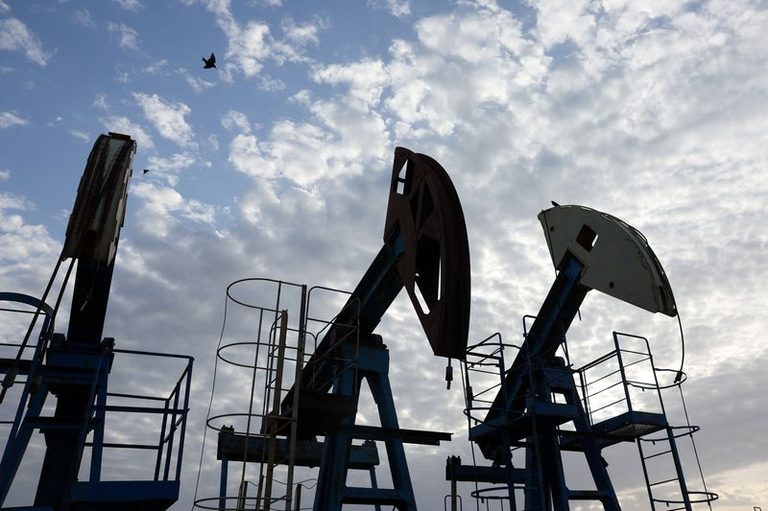
Oil markets showed little movement on Thursday, reflecting investors’ cautious assessment of the evolving security situation between the United States and Iran. Brent crude for October delivery edged up 25 cents, or 0.3%, to $91.87 a barrel, while U.S. West Texas Intermediate (WTI) for September delivery fell 2 cents to $85.81 a barrel. The more actively traded October WTI contract gained 14 cents, or 0.2%, to $84.53.
Four‑day rally pauses amid uncertainty
Both benchmarks have risen for four consecutive sessions, reaching their highest levels since late July. The September WTI contract is set to expire later on Thursday, a factor that often adds volatility to price movements.
Analyst perspective
“Oil prices remained elevated as the market is supported by sporadic attacks in the Middle East but lacks fresh momentum without a major escalation,” said Hiroyuki Kikukawa, chief strategist of Nissan Securities Investment. He added that the market is likely to maintain a gradual upward trend given the lingering uncertainty over peace talks and tensions involving the United Arab Emirates, Oman and Iran.
Geopolitical backdrop
The United Arab Emirates recently announced a suspension of all financial and economic transactions with Iran, heightening concerns about the stability of the Gulf region’s largest oil producer. On Tuesday, former President Donald Trump asserted that no diplomatic talks were underway with Iran and that the Strait of Hormuz remained open, a claim disputed by Iranian officials who said the waterway was still closed.
Shipping disruptions
Data released on Wednesday indicated a slowdown in shipping through the Strait of Hormuz, as many vessel owners chose to avoid the narrow passage amid unclear signals about its reopening. The strait, a critical chokepoint for global oil shipments, has been partially blocked since the onset of the U.S.-Iran conflict.
U.S. inventory trends
According to the Energy Information Administration, U.S. crude and gasoline inventories rose last week, while distillate stockpiles fell. Crude inventories increased by 4.4 million barrels in the week ending August 14, far exceeding analysts’ expectations for a 600,000‑barrel draw.
What’s next?
Market participants will continue to monitor diplomatic signals, regional military activity, and inventory data for clues about future price direction. Any escalation in the U.S.-Iran standoff or a decisive move to reopen the Strait of Hormuz could reignite price gains, while a clear de‑escalation may allow the market to settle further.
Original reporting: Appleton, WI News Feed (HLL/CB) — read the source article.