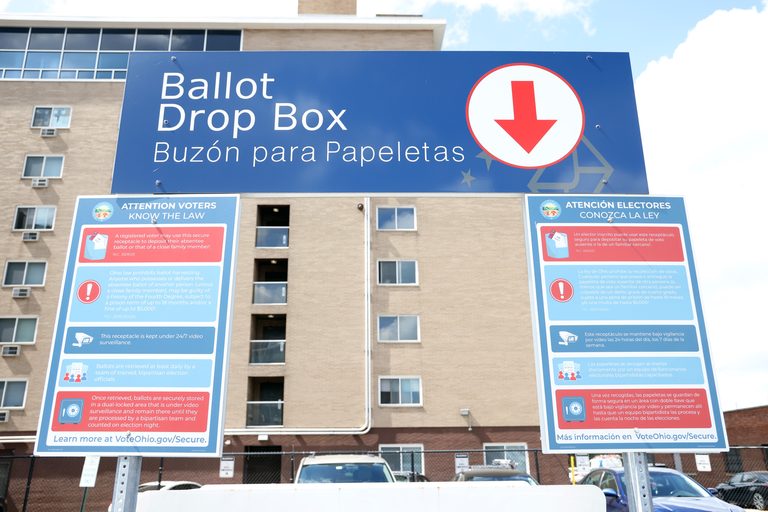
Ohio election officials reported a sharp decline in mail‑in ballot requests as early‑in‑person voting ramps up for the 2026 mid‑term cycle. As of Monday, 601,277 Ohioans had requested mail ballots, a 26% drop from the 812,198 requests recorded at the same point in the 2022 election.
County‑wide patterns mirror statewide trend
The decline is consistent across the state. In the six largest cities—Akron, Cleveland, Cincinnati, Columbus, Dayton and Toledo—mail ballot requests fell 24%, while the rest of Ohio saw a 28% decrease. Lawrence County, a deep‑red area, experienced the steepest drop at 47%.
Early‑in‑person voting more than doubles
Early‑in‑person voting is moving in the opposite direction. In the 56 counties where data is available, voters cast 20,030 early‑in‑person ballots on Tuesday, more than double the 8,647 ballots recorded on the first day of early voting in 2022. Cuyahoga County, for example, saw 1,908 early voters compared with 547 four years ago.
Officials cite voter preference, not single cause
Antone White, director of the Franklin County Board of Elections, noted that his county’s mail ballot requests have fallen from over 90,000 in 2018 and 2022 to about 70,000 this year. He attributes the shift to voters’ growing preference for in‑person voting since the height of the COVID‑19 pandemic, adding, “I wouldn’t attribute that change to any one single factor without more data.”
Trump’s criticism of mail voting adds context
The drop coincides with President Trump’s continued criticism of mail voting, which he has repeatedly called vulnerable to fraud. After returning to the White House in 2025, he directed the U.S. Postal Service to develop a system to screen ballot envelopes against voter lists. The Supreme Court blocked those regulations this year after voting‑rights groups challenged them.
Local leaders respond
Ohio League of Women Voters president Jen Miller said voters have expressed concerns about the reliability of the postal service, but she reaffirmed that mail voting remains secure and especially helpful for rural residents, students, and people with disabilities. She urged voters to request and return ballots early and to use drop boxes or county offices if they have doubts.
In Hamilton County, Democratic Party chair Alex Linser linked the shift to both the new larger early‑voting center and President Trump’s rhetoric, saying, “A lot of people have concerns about voting by mail. So I think we’re going to see less participation in that form because of the president’s behavior.”
Party perspectives
Ohio Republican Party spokesperson Nick Johnson framed the numbers as a sign of Republican momentum, stating, “We’re seeing that Republicans in our strongholds are on the move, and Democrats are standing still.” Ohio Democratic Party Chair Kathleen Clyde countered that Democratic voters are energized by their party’s message and pledged statewide outreach to help every eligible Ohioan vote.
Election officials caution that the relationship between reduced mail voting and overall turnout remains unclear. While overall turnout for the November 2024 election fell slightly compared with the 2020 presidential election, the May 2026 primary recorded the highest turnout for a state mid‑term primary since 2006, driven largely by Democratic voters.
What’s next?
Officials will continue monitoring early‑in‑person and mail voting numbers as the campaign season progresses. Aaron Ockerman, director of the Ohio Association of Election Officials, warned that a sustained decline in mail voting could lead to longer lines at polling places, but emphasized that the impact will depend on actual voter turnout on Election Day.
Original reporting: Signal Akron — read the source article.