During the final weeks of their majority in the Ohio Statehouse, House Republicans are weighing a constitutional amendment that would make it easier for the GOP‑controlled legislature to overturn a governor’s veto. The proposal, House Joint Resolution 11, was introduced by Rep. Ron Ferguson of Wintersville and would lower the veto‑override threshold in the House from 60 of 99 votes to 50, and in the Senate from 22 of 33 votes to 16.
Why the change is being considered
Republicans currently hold 65 seats in the Ohio House, just enough for a supermajority. Recent midterm results, however, have cut that margin, and recounts could leave the party with as few as 53‑55 seats. In the Senate, GOP members are projected to hold 22 seats after the latest elections. With those numbers, the party risks losing the ability to override a governor’s veto once Democrat governor‑elect Amy Acton assumes office in January.
Leadership’s stance
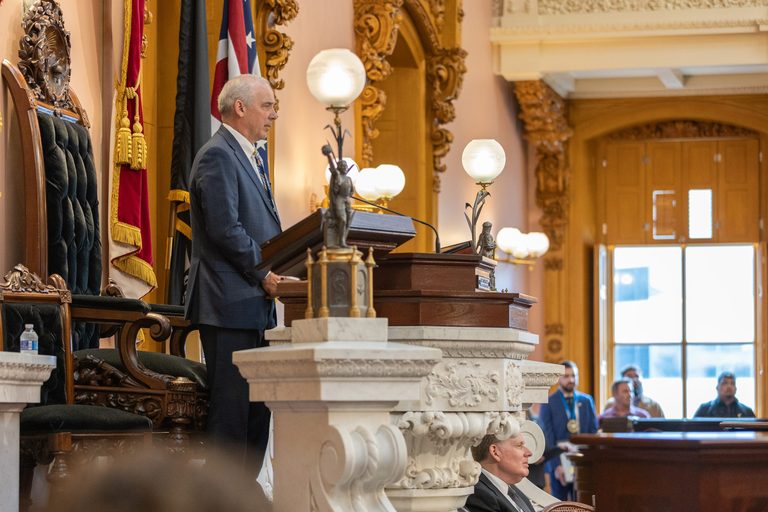
House Speaker Matt Huffman told reporters there are “a lot of people” urging him to act before Democrats take control of statewide offices. He said the speaker’s office is reviewing which executive powers are set by statute and which are protected by the state constitution. “We are always looking at things that make sure the legislature stays in a position where they can monitor what the executive branch is doing,” Huffman said.
Senate Republican leader Rob McColley said there have been “no discussions” about limiting the governor’s power before the end of the year, but he did not rule out future consideration of other executive offices.
Democratic response
Democratic leader Dani Isaacsohn warned that the move would ignore the will of voters, noting that Acton won the governor’s race by an eight‑point margin. “It is the worst possible time to ignore the will of the voters right after they’ve expressed it,” Isaacsohn said, calling the effort “anti‑democratic.”
Potential impact on other offices
Speaker Huffman also fielded questions about whether similar changes could be applied to other statewide offices that Democrats won, such as the secretary of state and attorney general. Those offices oversee critical functions like election administration and corruption enforcement. Huffman said he wants concrete proposals before taking any action.
Outlook
The lame‑duck session, which runs weekly until the December holidays, will be the GOP’s last chance to pass legislation before Governor‑elect Acton’s term begins. Outgoing Governor Mike DeWine has signaled he will not support any effort to diminish the governor’s authority, which could lead to a veto of any such amendment if it reaches his desk.
Conservative activist Brandon Rossi of Turning Point Action urged legislators to act, citing neighboring states Indiana and Kentucky as examples of the current system. “Be courageous and do what it takes to save Ohio!” he posted on X.
As the Ohio House debates the amendment, the balance of power in the state government hangs in the balance, with Republicans seeking to safeguard their legislative influence while Democrats push back on what they see as an attempt to undermine the electorate’s choice.
Original reporting: Signal Akron — read the source article.