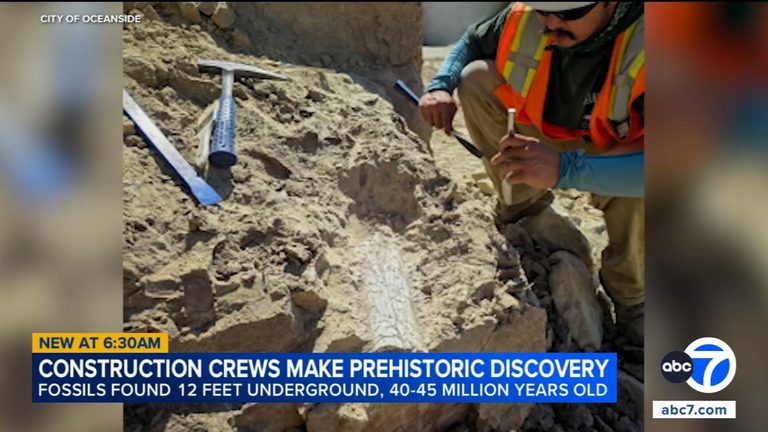
Crews working on a city infrastructure project in the City of Oceanside this month made a discovery that will excite both scientists and local residents. While excavating about 12 feet below the surface, workers uncovered a suite of fossilized bones that paleontologists say are up to 45 million years old.
What was found
The bones include several limb fragments, ribs and numerous other pieces that together suggest a large, hoofed mammal once roamed the ancient floodplains of what is now northwestern San Diego County. The find came from a geological unit the city refers to as “Member C of the Santiago Formation,” a thick layer of sedimentary rock that dates to the Eocene Epoch and falls within the Uintan North American Land Mammal Age.
Scientific significance
Joseph El Adli, a paleontologist who had been monitoring the site, immediately recognized the importance of the discovery. His team spent seven days carefully removing the fossils from tons of hardened mudstone and sandstone, then encased them in plaster field jackets for safe transport to an off‑site laboratory.
Based on the size and shape of the bones, El Adli suggested the remains could belong to a Titanothere – a massive, extinct mammal often called a “thunder beast” – or possibly an Amynodon, an ancient “swamp rhino.” Further laboratory work will allow scientists to narrow down the precise identity of the specimen.
Future plans
The city has pledged that the fossils will eventually be displayed in a museum collection, where they will be preserved and made accessible to the public and to researchers for continued study. By keeping the site’s exact location confidential, officials aim to protect public safety and the integrity of the fossil bed.
Local leaders see the find as a point of pride for Oceanside, highlighting the city’s rich natural history alongside its modern growth. The discovery also underscores the importance of careful oversight during public works projects, ensuring that valuable scientific resources are not inadvertently lost.
Community impact
Residents can look forward to learning more about the ancient creatures that once inhabited the region once the fossils are prepared and displayed. Educational programs and museum exhibits are expected to draw interest from schools, families and science enthusiasts throughout Southern California.
Original reporting: Brookhaven News – ABC7 New York — read the source article.