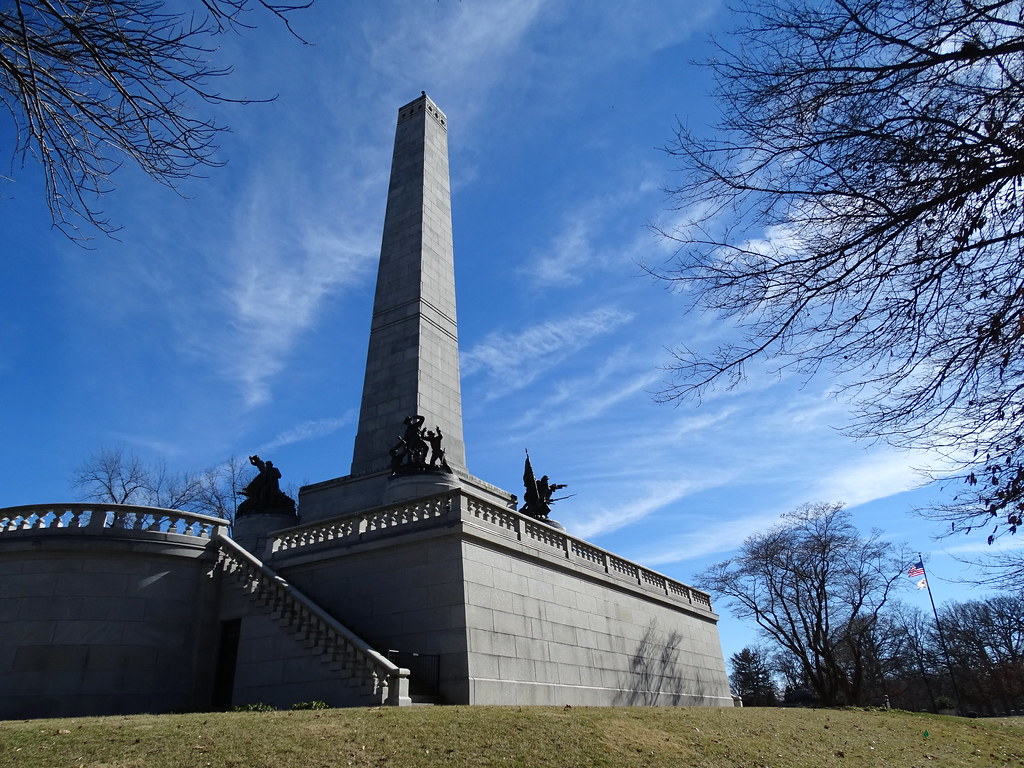
What is there to do at Oak Ridge Cemetery beyond visiting the tomb?
That question gets asked more than the groundskeepers probably expect, and the honest answer is: quite a lot. Lincoln’s Tomb draws the attention, as it always has — the bronze nose on the standing Lincoln statue outside has been rubbed to a shine by decades of visitors who’ve heard the legend about good luck. But Oak Ridge Cemetery stretches across 365 acres on Springfield’s northwest side, and the tomb is only the beginning of what’s there.
The cemetery was established in 1860, and the landscape design follows the rural cemetery movement that was fashionable in the mid-19th century — rolling terrain, mature hardwood canopy, winding carriage paths that now serve as quiet walking routes. In autumn especially, the combination of old-growth oaks, hickories, and scattered maples makes for some of the most underappreciated color in central Illinois. There are no admission fees, no timed-entry passes, no crowds thinning out by midmorning.
The grounds are open daily from 9 a.m. to 5 p.m., with the tomb interior accessible during those same hours. Staff from the Illinois Historic Preservation Agency manage Lincoln’s Tomb itself; interpretive panels inside explain the history of the monument and the several times Lincoln’s body was moved and reinterred before its final placement beneath the floor of the burial chamber in 1901. Mary Todd Lincoln and three of their four sons are entombed here as well — a fact that tends to register differently in person than it does on a page.
Beyond the Lincoln monument, Oak Ridge holds the graves of a number of Illinois governors, Civil War soldiers in a dedicated section near the cemetery’s east drive, and several notable Springfield families whose names show up on downtown streets and buildings. The Civil War section is worth a slow walk — modest headstones, many of them worn smooth, arranged in rows that carry a different weight than the ornate monuments elsewhere on the grounds.
For those who visit regularly, Oak Ridge functions less as a destination and more as a park in the older sense of the word — a designed landscape meant for contemplative walking. Early mornings on weekdays, when tour buses haven’t yet arrived and the light is still low through the trees, the place feels genuinely still. Joggers and dog walkers use the interior drives, keeping to the edges. The grounds are flat enough in some sections and hilly enough in others to give a walk some variation.
Parking is free and plentiful near the tomb entrance off Monument Avenue. From downtown Springfield, it’s about a ten-minute drive north. There’s a small gift shop adjacent to the tomb building that carries the usual commemorative items, though it’s staffed seasonally and hours vary.
The cemetery doesn’t advertise itself, exactly. It doesn’t need to. Lincoln’s name does the work. But the people who return more than once — who walk past the tomb and keep going, into the older sections where the oaks close overhead and the path curves out of sight — they tend to treat it as something the tourist map undersells. That reputation is accurate.