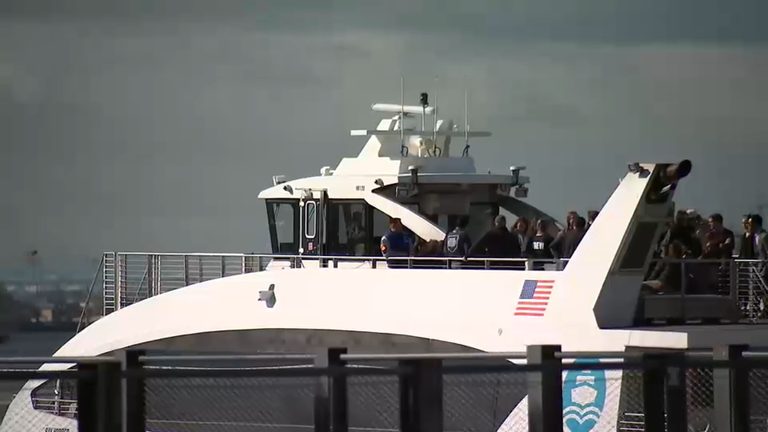
New York City public schools will soon have a new kind of classroom – one that sails the harbor. In partnership with the Billion Oyster Project, NYC Ferry will convert off‑peak weekday vessels into floating science labs, allowing students to conduct experiments while cruising the East River and Upper New York Bay.
Program details and goals
The initiative aims to bring up to 10,000 students onto the water each year, according to the nonprofit’s stated target. Each 90‑minute voyage will focus on oyster restoration, marine ecology, climate resilience, water‑quality testing and the design of the city’s working waterfront. “Off‑peak weekday hours, our ferries will become classrooms,” said Jeanny Pak, chief operating officer of NYCEDC. “On 90‑minute voyages, students will learn about oyster restoration, marine ecology, climate resilience.”
Ann Fraioli, director of education for the Billion Oyster Project, added, “They’re going to do marine science, water quality testing, talking about the waterfront design, and the working harbor.” The program is designed to extend learning beyond traditional school walls and to expose young New Yorkers to career paths in maritime industries, environmental science and coastal engineering.
Why the harbor matters
New York Harbor is a living laboratory. Oysters, once abundant, help filter water, improve habitat for fish and protect shorelines from storm surge. By involving students directly in restoration efforts, the project hopes to foster a new generation of stewards who understand both the ecological and economic importance of a healthy harbor.
NYC Ferry, a city‑run transit service, benefits from the partnership as well. Utilizing off‑peak vessels for educational purposes maximizes the utility of existing assets while reinforcing the agency’s commitment to community outreach and environmental responsibility.
Community and school involvement
Participating schools will coordinate with the Billion Oyster Project’s education team to align curriculum with the on‑board activities. Teachers will receive lesson plans that tie classroom instruction to the hands‑on work students perform aboard the ferries. The program also includes opportunities for students to engage with local maritime professionals, giving them a glimpse of viable career options in a city that relies heavily on its waterfront.
Parents and community leaders have praised the effort as a practical way to bring STEM education to students who might not otherwise have access to field‑based learning. “This is a wonderful way to connect our kids to the city’s natural resources and future job market,” said a local parent who attended a pilot session.
Looking ahead
The floating classroom program is set to launch later this fall, with the first wave of schools scheduled to board the ferries in December. Organizers will track participation numbers and student feedback to refine the curriculum and expand capacity in future years.
By turning everyday ferry rides into immersive learning experiences, the city and its nonprofit partners hope to nurture both scientific curiosity and a sense of civic pride among New York’s youth.
Original reporting: Brookhaven News – ABC7 New York — read the source article.