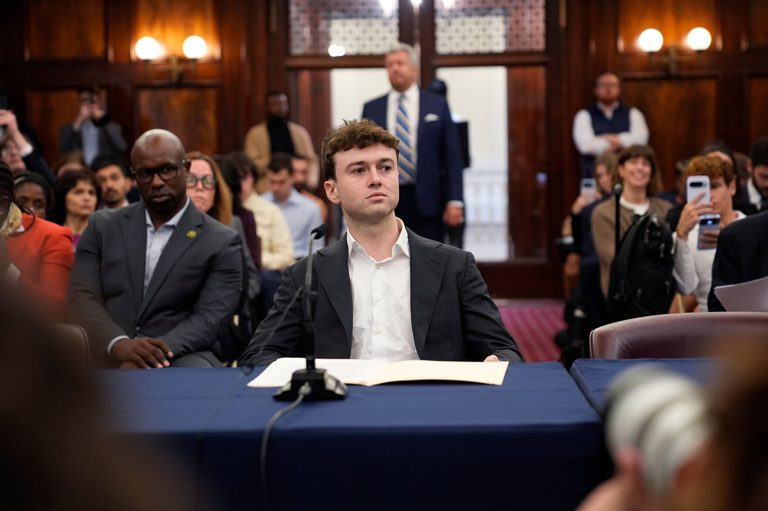
New York City leaders gathered on Monday for a public hearing of the City Council’s technology committee, where former engineers from Anthropic, OpenAI and Google DeepMind sounded the alarm on the rapid development of artificial intelligence. The panel, representing some of the nation’s largest AI firms, urged the council to consider stronger oversight to protect public safety.
Industry insiders describe a risky culture
Jacob Coxon, a former Anthropic engineer who has become a prominent voice for AI regulation, told councilmembers that the industry’s “startup mindset – move fast, break things, fix them later – works for a photo‑sharing app but not for the most powerful technology ever built.” He warned that without transparency and safeguards, the trajectory could lead to a loss of human control and even existential danger.
Other panelists echoed Coxon’s concerns, noting that while AI tools are already improving daily life, the pace of development outstrips the ability of companies to fully understand or manage the systems they create.
Trump administration’s response
President Trump has publicly dismissed many AI‑related fears as a “hoax.” In late September, his administration signed a voluntary agreement with leading AI firms that outlines a series of self‑policing steps. The agreement encourages companies to adopt safety protocols, share risk assessments, and cooperate with any future regulatory frameworks.
While critics argue the approach is too hands‑off, the administration’s stance reflects a belief that industry expertise, rather than heavy‑handed government mandates, will best ensure responsible development. The administration’s response was placed near the top of the hearing transcript, underscoring its priority in the national conversation.
Council’s questions and company replies
City Council Speaker Julie Menin pressed the panel to quantify the worst‑case catastrophic risk of AI. OpenAI’s Morgan Dwyer responded, “I don’t know — I also don’t think it matters whether it’s 1% or 10% or 20% chance that something catastrophic will go wrong. None of these levels is remotely acceptable. We should not train models that we cannot make an extremely strong case that we can keep under human control.” Menin called the answer “flippant at best,” highlighting the tension between technical uncertainty and public accountability.
Despite the criticism, Dwyer emphasized OpenAI’s commitment to safety, stating that the percentage chance is less important than a firm dedication to responsible development.
Proposed local regulations
The council is reviewing several proposals, including requirements for AI companies to disclose tool capabilities, obtain third‑party approval for high‑risk systems deployed in the city, and offer whistleblower incentives for reporting violations. These measures aim to create transparency and give local officials a clearer view of emerging technologies.
New York Governor Kathy Hochul, a Democrat, has also moved to impose reporting and transparency standards at the state level. While state authority is limited by the border‑less nature of AI, the combined efforts of city and state officials signal a growing recognition of the need for coordinated oversight.
Industry’s willingness to cooperate
Logan Graham of Anthropic expressed enthusiasm for “smart regulation,” noting that AI’s power demands careful handling to protect individuals, institutions and public trust. He urged relentless scientific work to mitigate risks.
Overall, the hearing highlighted a convergence of concerns: industry insiders calling for a slowdown, local officials seeking concrete safeguards, and a federal administration promoting voluntary compliance. The dialogue underscores the complex balance between fostering innovation and protecting the public from unintended consequences.
What’s next?
The City Council is expected to vote on the proposed regulations in the coming weeks. Stakeholders from both the public and private sectors will continue to monitor the outcome, which could set a precedent for other municipalities grappling with AI’s rapid rise.
Original reporting: KTBS 3 (Shreveport) — read the source article.