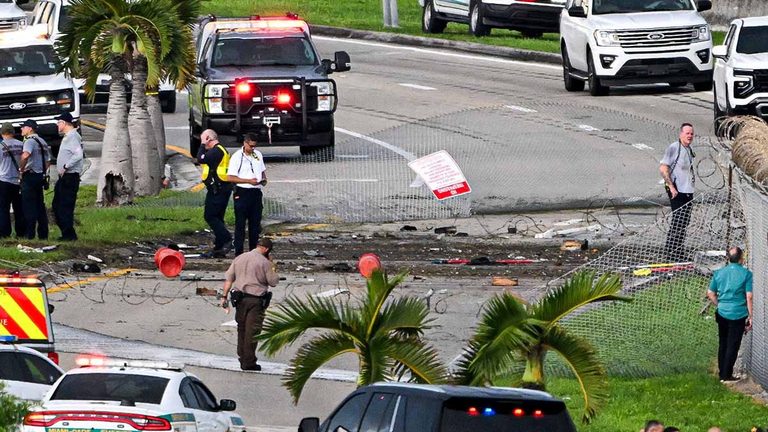
The National Transportation Safety Board (NTSB) spent Tuesday on the ground at Miami International Airport, the first full day of its on‑site investigation into the deadly Amazon cargo‑plane crash that occurred on Sunday. The Boeing 767, operated by 21 Air, overran the runway, struck a cleaning‑crew van and an SUV on a public street, and left five people dead.
What investigators have learned so far
Chairwoman Jennifer Homendy described the scene as “utter devastation” and noted that the crash closed the airport for several hours, canceling more than 225 flights and delaying hundreds more. Parts of the runway have since reopened, but the investigation is still in its early stages.
According to NTSB investigator‑in‑charge Chihoon Shin, the aircraft’s recorded ground speed was 65 knots in its final moments, and there was “no indication in the recorded data that speed brakes or thrust reversers were deployed.” This finding raises new questions about why the plane could not be slowed before it left the runway.
Pilot and crew interviews planned
The board plans to interview the 55‑year‑old pilot and the 37‑year‑old co‑pilot on Wednesday, as well as air‑traffic controllers, to determine whether communication issues contributed to the accident. “We do have questions for the pilots,” Homendy said.
Authorities are also urging anyone with relevant information to contact the NTSB, emphasizing that even seemingly minor details could prove crucial.
Possible factors: wind and runway safety
Strong winds over 25 knots were reported on Sunday afternoon. Video analysts believe a strong tailwind may have pushed the aircraft farther down the runway than intended, preventing a proper flare before touchdown. Controllers had not changed the approach to give the plane a headwind, a standard safety measure when winds shift.
Miami International does not have the lightweight, crushable material that the Federal Aviation Administration (FAA) recommends for runway‑end safety areas—about 120 U.S. airports have installed this technology, which the FAA says has saved roughly 500 lives. Miami does, however, meet federal requirements with a 1,000‑foot safety buffer beyond the runway.
Impact on the community
The five victims were members of Professional Ocean Service Corp., a company that cleans aircraft. The firm released a statement expressing deep sorrow, calling its employees “family” and offering prayers to the affected families.
Amazon issued a statement confirming its cooperation with the investigation and extending its deepest sympathies to the victims and their loved ones.
Broader context
This is the second cargo‑plane crash in the United States within a year. In October, a UPS aircraft lost an engine during take‑off in Louisville, Kentucky, killing three pilots and 12 people on the ground.
Homendy stressed that the NTSB’s ultimate goal is to prevent future tragedies. “Our recommendations must be implemented or we’re going to be here again,” she warned, underscoring the board’s long‑standing call for runway‑excursion safety systems.
The investigation remains ongoing. The NTSB plans to release cockpit‑voice‑recorder data after completing crew interviews, and officials caution that no definitive cause has been determined yet.
Original reporting: NBC4 Los Angeles — read the source article.