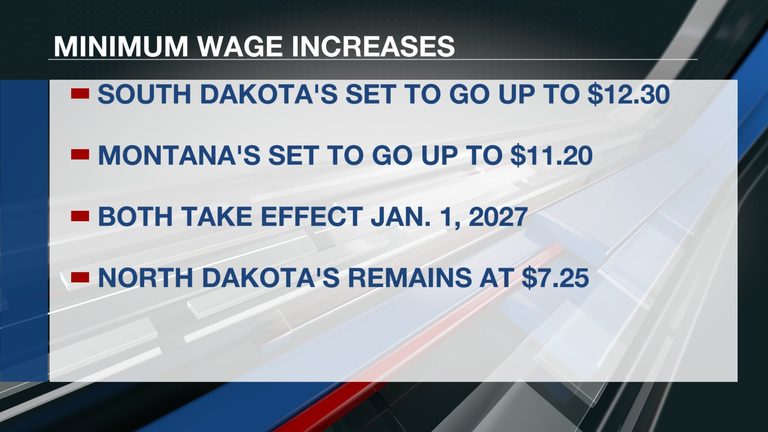
While workers in South Dakota and Montana are set to see higher pay floors next year, North Dakota continues to operate on the federal minimum wage of $7.25 an hour, a level unchanged since July 2009. The contrast highlights a growing regional gap in wage policy that could affect job seekers and employers across the Upper Midwest.
Neighboring states move ahead
South Dakota’s legislature approved a modest increase of 45 cents for non‑tipped employees, raising the state minimum wage from $11.85 to $12.30 per hour. Montana also voted to raise its minimum wage, moving the floor from $10.85 to $11.20. Both changes will take effect on Jan. 1, 2027, following earlier adjustments earlier this year.
North Dakota’s wage floor remains static
In contrast, North Dakota has not altered its minimum wage in more than 17 years. The state continues to follow the federal baseline of $7.25 per hour, a figure that has not kept pace with inflation or the cost of living increases experienced by many families in the region.
What the numbers mean for workers
For a full‑time employee working 40 hours a week, the South Dakota increase translates to an additional $1,800 in annual earnings, while Montana’s raise adds roughly $1,200. In North Dakota, workers earning the minimum wage will continue to make about $15,080 per year before taxes, a figure that falls well short of the earnings potential in the neighboring states after their hikes.
Business perspective
Local business owners in North Dakota have expressed mixed feelings. Some argue that a higher wage floor could increase labor costs and pressure small enterprises, while others contend that a modest increase would boost consumer spending and help retain workers. The state’s business community is watching the developments in South Dakota and Montana closely, weighing the potential impact on regional competitiveness.
Policy context
North Dakota’s decision to maintain the federal minimum wage aligns with a broader state philosophy that emphasizes limited government intervention in the marketplace. Proponents argue that keeping wages low encourages job creation and keeps the state attractive to employers. Critics, however, point to the long‑standing stagnation and argue that the current rate fails to provide a livable income for many families.
Looking ahead
State legislators have not announced any immediate plans to revisit the minimum wage. Any future change would likely involve a bipartisan debate that balances economic growth with the needs of working families. In the meantime, North Dakota residents can expect the same wage floor that has been in place for over a decade, even as their neighbors enjoy higher minimum earnings.
Community response
Local advocacy groups have begun organizing informational sessions to educate workers about the wage disparity and to discuss potential policy options. While the issue does not dominate the state’s political agenda, it remains a point of concern for families striving to make ends meet.
As the Jan. 1, 2027 effective date approaches, the wage gap between North Dakota and its neighboring states will become more pronounced, prompting ongoing conversation about the role of state policy in supporting families and sustaining a robust local economy.
Original reporting: KFYR-TV Bismarck (news) — read the source article.