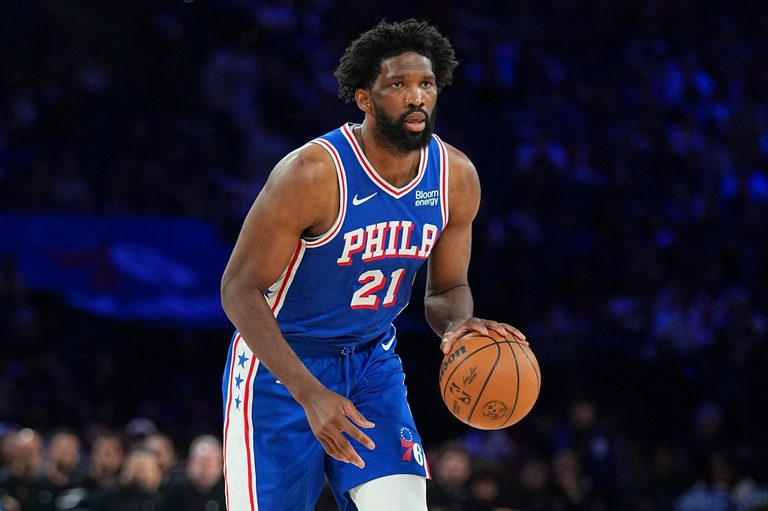
Two Fridays ago the Philadelphia 76ers faced the Cleveland Cavaliers in an East Group B matchup. The Sixers entered the game with an impressive 8-1 record, while Cleveland was a modest 4-4. Many expected a routine win for the title‑contending Sixers, especially with the Cavaliers missing starting center Jarrett Allen and bench player Jaylon Tyson.
Game breakdown
Instead, Cleveland throttled Philadelphia 119-95. Early in the first quarter, Joel Embiid struggled in the pick‑and‑roll, unable to dominate either the ball‑handler or the screener. James Harden’s options were limited to a floater or a lob to Evan Mobley, and the play failed to generate a quality shot.
LeBron James, matched up against the smaller Donovan Mitchell, found a defensive weakness but missed the open jumper—a problem he has faced all season, shooting just 22.5% from three‑point range. The Sixers also lagged in offensive rebounding, ranking 28th in the league.
Key moments
Mobley hit a three‑pointer, but James’ attempt to push the pace resulted in a turnover after a mis‑read pass. Harden’s pick‑and‑roll later in the quarter saw him and Embiid at the free‑throw line simultaneously, a stark contrast to Embiid’s dominant free‑throw line presence five years ago.
Tyrese Maxey’s floater missed, and the ball remained in Cleveland’s hands. Dean Wade’s early‑ball‑handling did not translate into a fast‑break opportunity, leaving only four defenders on the perimeter while the fifth defender was absent. By the time Thomas Bryant dunked, Embiid was barely past half‑court.
Statistical context
At the end of the first quarter the Sixers trailed 33-22. The difference in three‑point shooting was negligible—Cleveland shot 25% compared to Philadelphia’s 22.2%. Fatigue was not a factor; both Embiid and James were in the lineup, eliminating a back‑to‑back explanation.
The Sixers’ offense relies heavily on star power but lacks consistent shooting, ranking 25th in three‑point attempts per game. Their transition game is also subpar, sitting eighth‑highest in transition frequency, and they struggle to secure second‑chance points.
Defensively, Embiid’s block rate has slipped to the 29th percentile among big men, and opponents shoot about four percent better around the rim when he is on the floor, according to Cleaning the Glass data. Adem Bona’s absence, though initially dismissed, proved more significant; his athleticism and tenacity are missing from the center position.
Recent performance and outlook
Since that loss the Sixers have rebounded, improving to 12-3 and leading the Eastern Conference. However, their net rating sits at 11th in the league, a disparity explained by a perfect 10-0 record in clutch situations—a statistic that masks underlying weaknesses.
Cleaning the Glass highlights the Sixers’ dominance in Win Differential, a metric that measures wins above expectation based on offensive and defensive efficiency. Philadelphia leads the league with 3.6 wins above expected, double the second‑place Los Angeles Lakers (1.7).
While the team’s ability to win close games is commendable, relying on narrow victories is unsustainable over an 82‑game season. If a few clutch outcomes swing the other way, the Sixers could quickly find themselves hovering around .500.
Conclusion
The Sixers possess elite talent, but the recent blowout loss underscores structural issues that could hinder a deep playoff run. Addressing shooting consistency, rebounding, and interior defense will be essential if Philadelphia hopes to convert its strong record into a championship‑contending performance.
Original reporting: All Sports Feed (HLL/CB) — read the source article.