Bismarck, N.D. – The North Dakota Department of Public Instruction (DPI) announced that applications for the state’s first public charter schools will be accepted from Dec. 2, 2026 through March 2, 2027. The schools, authorized by Senate Bill 2241 in 2025, are expected to begin operating in the fall of 2027.
Funding and enrollment rules
Each approved charter school will receive an average per‑student payment of roughly $8,300, based on enrollment numbers. Unlike traditional public schools, charter schools will not draw from local property‑tax revenues. By law, they must operate within the public education system, cannot charge tuition, and must admit all applicants, using a lottery if demand exceeds capacity. Admissions criteria may not consider ethnicity, national origin, religion, gender, income level, English proficiency, or disability.
Application process and oversight
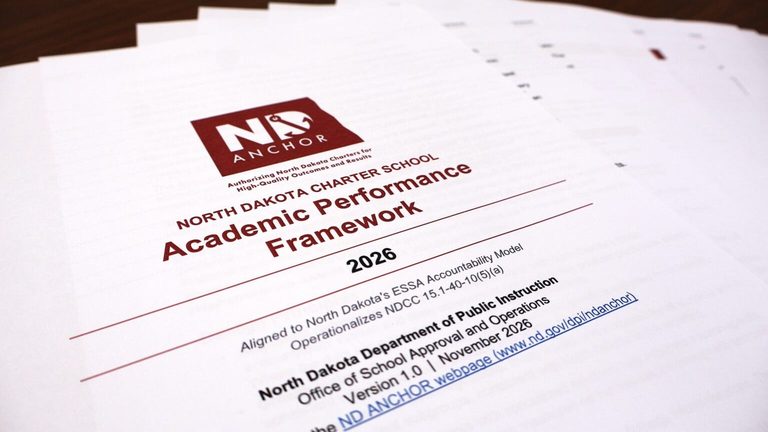
Prospective schools must submit a detailed application under the ND ANCHOR program (Authorizing North Dakota Charters for High‑Quality Outcomes and Results). Applications will be reviewed by DPI staff, and each applicant will participate in a public interview before any approval is granted. As part of the process, schools must enter into performance agreements that set benchmarks for academic proficiency, attendance, graduation readiness, financial health, governance, and community engagement. Renewal eligibility will depend on meeting these standards.
State officials emphasize quality and accountability
Levi Bachmeier, Superintendent of Public Instruction, said, “Opening a public school is a serious responsibility, and North Dakota families deserve confidence that any new school has a clear plan to help students succeed.” Arlene Wolf, DPI’s director of school approval and opportunity, added that the application materials reflect two years of research into best practices and consultations with national charter organizations and other states.
Wolf noted that the performance agreements act as a contract, ensuring schools are held accountable for outcomes. “We’re ensuring that we’re really, truly opening those that are high‑quality schools with really good plans and have the best interests at heart,” she said.
Support from educators and tribal leaders
Nick Archuleta, president of ND United, praised the performance‑agreement model as a “guardrail to ensure quality education,” and highlighted requirements for licensed teachers and an in‑person learning component to prevent purely online academies. Tribal leader Dave Archambault Sr., a member of the Standing Rock Sioux Tribe, expressed optimism that charter schools could provide new options for Native American families, potentially improving graduation outcomes for reservation students.
Next steps
DPI will release an informational video on Monday to explain the application process in detail. The department also plans to open another application window next fall, with the goal of establishing an annual fall‑season window for charter‑school proposals.
Existing North Dakota public schools may also convert to charter status under the new law, and private schools interested in the model are encouraged to review the application requirements, which may already align with their current operations.
Original reporting: KFYR-TV Bismarck (news) — read the source article.