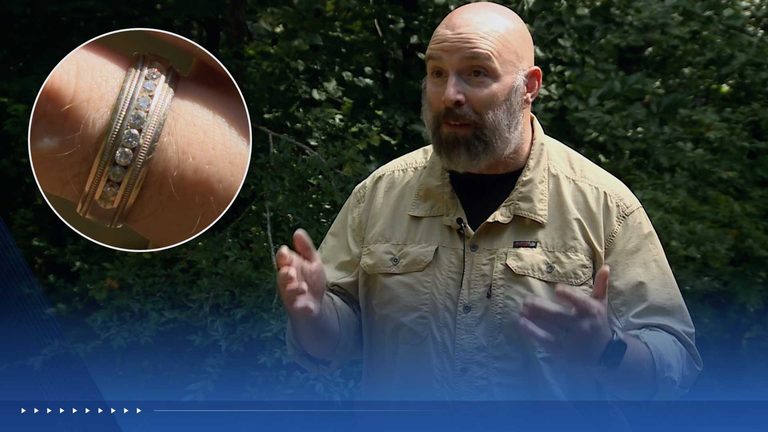
When David Ashe was landscaping his Forsyth County backyard in early August, a sudden encounter with a yellowjacket nest turned a routine task into a painful ordeal. While swatting at the aggressive insects, his wedding ring was knocked from his finger and vanished into a nearby wooded ravine.
“I was swatting hard, and my ring shot off, and at that point I just ran,” Ashe recalled, noting that he escaped with more than 100 stings. The ring, a white‑gold band set with a line of diamonds, held deep sentimental value because his wife had chosen and engraved it herself.
Search efforts hampered by weather and terrain
Weeks passed before Ashe could return to the site. Heavy rain filled the ravine, pushing debris toward Lake Norman and making the search treacherous. A low‑cost metal detector he purchased yielded only false positives from other metal objects, leaving him discouraged.
Determined not to give up, Ashe turned to an online community called The Ring Finders. There he connected with Brad Trogdon, a Forsyth County resident who describes himself as an “obsessive metal detector” enthusiast.
Volunteer expertise leads to discovery
Trogdon, who first discovered his passion for metal detecting on a beach trip two years ago, agreed to help. “I have a bad habit of not wanting to give up,” he said. The pair spent hours combing the woods behind Ashe’s home, even working after dark. When the initial search proved fruitless, Trogdon shifted to a different section of the ravine.
“It was late, it was very hot, I was soaking wet, and I said I’m going to give it one more go because I hadn’t searched that area before,” Trogdon explained. His detector then emitted the distinct beeping sound they had been waiting for. With a flashlight, they saw the ring glinting among the roots of a rotten tree stump just feet from the house.
“When I put it on my hand, everything felt back to where it should be,” Ashe said, expressing relief that the treasured symbol of his marriage was finally restored.
Community spirit shines
The successful recovery highlights the value of local volunteers who apply specialized hobbies to help neighbors. Trogdon’s willingness to lend his higher‑end equipment and persistence exemplifies the kind of community service that strengthens neighborhood bonds.
Ashe’s experience also serves as a reminder to exercise caution when working near insect nests and to consider professional assistance for metal‑detecting searches in challenging terrain.
For readers interested in metal‑detecting or in joining similar volunteer groups, The Ring Finders website offers resources and contact information.
Original reporting: 40/29 / KHBS (NW Arkansas) — read the source article.