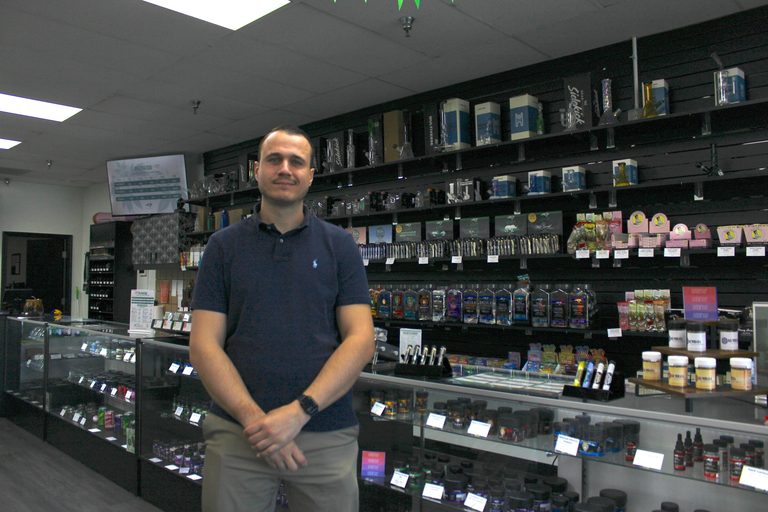
Jacob Virgil, president of NoDa Brewing Company in Charlotte, spent a week in Washington, D.C., lobbying Congress to reverse a looming federal ban on hemp‑derived THC products slated for Dec. 11, 2026. Virgil’s brewery added a THC‑infused seltzer line, Happy Bird, in 2025 after alcohol sales fell post‑COVID. The seltzer now accounts for about 11% of the brewery’s revenue.
Federal action threatens local industry
The 2018 Farm Bill unintentionally broadened the definition of hemp, allowing products like THC seltzers, gummies, vapes and smokeable hemp to be sold across North Carolina in breweries, restaurants, bars and specialty shops. In 2025 Congress passed legislation narrowing the definition, setting a deadline of Nov. 12, 2026, for most hemp‑derived products to become illegal. The deadline for non‑synthetic hemp products was later pushed to Dec. 11, the same day the federal government must fund itself.
Virgil told HLL he estimates a roughly 50% chance that industry stakeholders can prevent the ban. “I’m very optimistic that the government will not shut down, and I’m optimistic that we’ll be able to hitch our ride on something that could keep the government open,” he said.
State response and legislative debate
North Carolina has a growing hemp sector. An economic analysis values the state’s hemp‑derived THC industry at $3.2 billion and notes more than 16,000 workers. The state first authorized industrial hemp production in 2015, with a pilot program beginning in 2017 and a 2022 law aligning state policy with federal rules.
During the summer, state legislators debated two bills: one that would pre‑emptively ban intoxicating hemp products, and another that would keep the market alive under a regulatory framework. House Democrats generally favored regulation, proposing age limits (no sales to anyone under 21), independent lab testing, and strict labeling to protect children. Rep. Robert Reives (D‑Chatham) warned that an outright ban would spawn a black market and hurt farmers transitioning from tobacco.
Republican senators pushed for stricter limits. Sen. Michael Lee (R‑New Hanover) criticized branding that mimics popular candy, saying it “is changing their brain through neuroscience” and could lead to addiction. Sen. Bill Rabon (R‑Brunswick) argued that if the industry cannot be responsibly regulated, it should be eliminated entirely.
Neither bill passed, leaving the state’s approach in limbo as the federal deadline approaches.
Industry self‑regulation and calls for federal relief
Carolindica CEO Chris Karazin dismissed concerns about marketing to minors as “a great scare tactic” with limited substance, noting that most reputable sellers already restrict sales to adults 21 and older and use independent labs for testing.
Virgil echoed the sentiment, comparing hemp‑derived THC products to alcohol: “Just like alcohol, I think it’s unsafe for children. We should put commonsense regulations in place to protect them.” He advocated for the Hemp Guardrails Act, which would repeal the Dec. 11 ban, prohibit sales to minors, require child‑resistant packaging, and mandate transparent testing results.
State Senate Democratic Leader Sydney Batch (D‑Wake) said lawmakers will wait to see the federal outcome before acting at the state level, emphasizing the need to support hemp farmers while protecting youth from harmful substances.
Outlook
With the federal deadline only weeks away, North Carolina’s hemp industry remains hopeful that congressional action or a continuing resolution will keep the market open. The outcome will affect thousands of jobs, a multi‑billion‑dollar sector, and the broader push for responsible regulation of emerging cannabis‑derived products.
Original reporting: Carolina Public Press — read the source article.