Recent college graduates in North Carolina are finding it increasingly difficult to secure employment, despite the state’s relatively low unemployment rate. Cities like Raleigh and Charlotte are often praised as ideal for new graduates, yet the reality is more complex. Economists highlight a slowdown in hiring and a decline in starting wages for new graduates, contributing to a challenging job market.
Economic Challenges for New Graduates
Andrew Berger-Gross, a senior economist at the North Carolina Department of Commerce, notes that the employment rates and median earnings for college graduates have been declining for two consecutive years. This trend reflects a broader labor market recession affecting recent graduates both in North Carolina and nationwide.
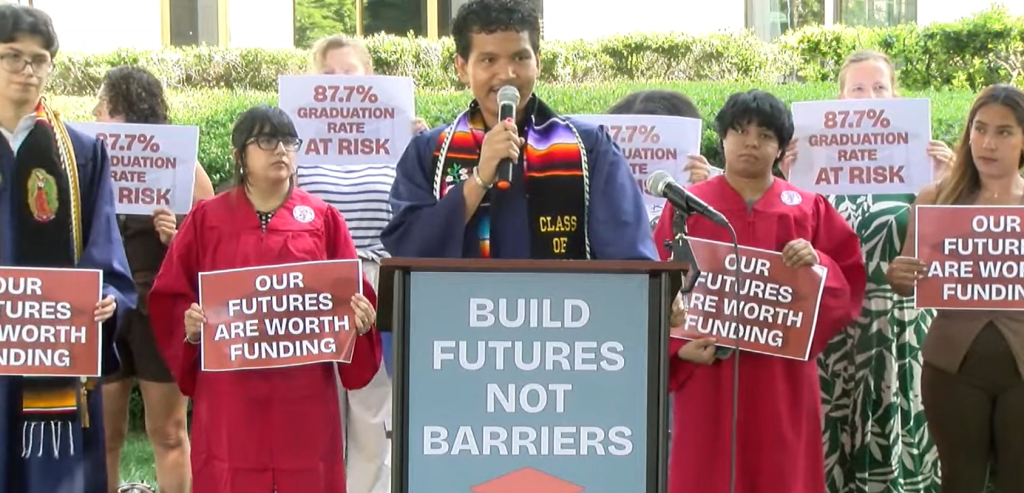
Michael Ramos, a Duke University graduate and the first in his family to earn a college degree, expressed his concerns during a press conference outside the North Carolina General Assembly. He and his peers face tough choices: applying for jobs with high competition, pursuing further education amidst funding cuts, or accepting jobs outside their fields of study.
Impact of Remote Work and Economic Trends
Economists like Berger-Gross and UNC-Greensboro’s Dora Gicheva suggest that the rise in remote work has made it harder for employers to train young workers, contributing to reduced hiring rates. Additionally, the demand for college-educated workers is not keeping pace with the increasing number of graduates, leading to a tighter job market.
While North Carolina’s economy remains relatively stable compared to the national landscape, the labor market slowdown is evident. Companies are quietly downsizing through attrition, choosing not to fill positions when employees leave. This has resulted in a unique situation where job growth and wage growth have slowed without mass layoffs.
Future Prospects and Challenges
The challenges faced by new graduates are compounded by rising living costs and a competitive job market. Despite the perception that STEM fields offer more opportunities, even these areas are experiencing a decline in job growth due to factors like artificial intelligence. As the job market continues to evolve, graduates must navigate these uncertainties while striving to achieve their career goals.
Original reporting: Carolina Public Press — read the source article.