Raleigh, N.C. – The North Carolina State Fair once again highlighted a time‑honored agricultural tradition as families gathered to compete in a tobacco‑looping contest. Seventh‑grader Sophie Sunday, the youngest participant this year, stepped away from class to “loop tobacco at the fair,” a phrase that puzzled many of her classmates but sparked curiosity about a practice that has shaped the lives of countless farm families.
From stringing to looping: regional names for the same craft
Historically, tobacco was harvested by hand, hung in log barns and cured over wood fires. Before curing, the green leaves were strung on long wooden sticks – a process known as “stringing” in central North Carolina and “looping” in the eastern part of the state. “Where I grew up, we call it stringing,” explained Pat Short, superintendent of the fair’s Heritage Circle. “Down east, they call it looping tobacco.” The contest at the fair reflects both terms, honoring the skill once essential to family farms.
Modern methods meet old‑world skill
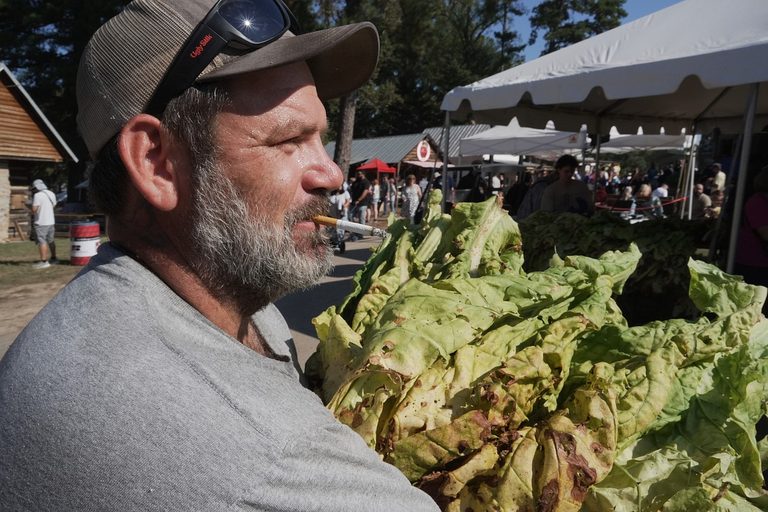
Today, most flue‑cured tobacco in North Carolina is harvested by machine and stored in metal bulk barns heated by natural gas. Yet the contest preserves the manual technique: teams gather yellow‑green leaves, wrap twine around the stems on a stick, and tie the bundle once at least 36 leaves are secured. The fastest teams can complete a stick in under a minute.
More than a hundred years after tobacco became the state’s leading cash crop, it now ranks third behind corn and soybeans. In 2025 growers produced over 248 million pounds of tobacco, valued at nearly $546 million, according to the U.S. Department of Agriculture. Most of the leaf still ends up in cigarettes, though researchers are exploring its potential in vaccines and other pharmaceuticals.
Three generations compete for the $250 prize
Sophie joined her mother Annie, grandmother Peggy Medlin, and great‑aunt in a team called “The 3 Suckers,” a nod to a common leaf defect. The family’s squad, the defending champion Maple Hill Loopers, included her grandfather Ken Jones, who recalled how a 6‑ to 10‑acre tobacco farm could once sustain a family. Today, growers often contract 400 to 600 acres at a time.
While the Maple Hill Loopers were edged out by the Benson Nites, who posted a time just under one minute and four seconds, Sophie’s team did not place – a result she took in stride. “I think of it as tradition,” she said, emphasizing the cultural value over competition.
Balancing heritage with health concerns
Contest participants are aware of tobacco’s health impact. Sophie admitted feeling conflicted, noting, “Every single year I go, I’m like, ‘Why do we do this? It’s, like, bad for people,’ but the leaves can also get used for different things, not just smoking.” Andrea Ashby, director of public affairs for the North Carolina Department of Agriculture and Consumer Services, explained that careful handling is essential because loose leaves could ignite during curing.
Despite the health concerns, the fair’s organizers and many locals view the contest as a living link to the state’s agricultural roots. “It makes my heart smile,” said Sophie’s grandmother, underscoring how the event nurtures family bonds and community pride.
Looking ahead
As the tobacco industry evolves, the State Fair’s looping contest serves as a reminder of the hard work and resilience that built North Carolina’s farm communities. For Sophie and her family, the tradition will likely continue, with plans to teach future generations the skill that once helped families raise themselves.
Original reporting: Texarkana Gazette — read the source article.