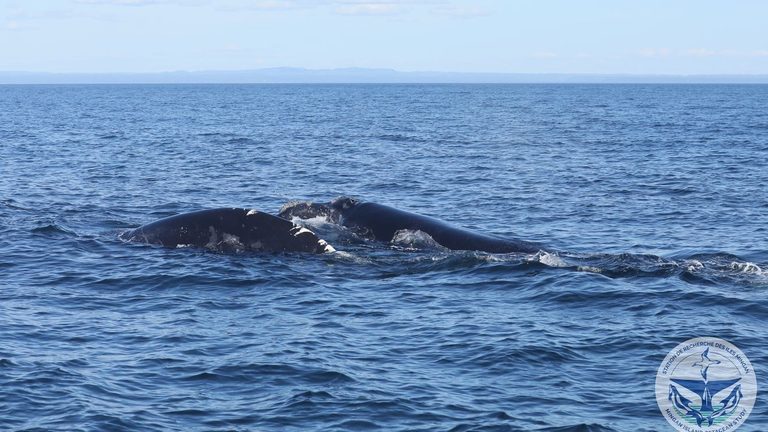
The North Atlantic Right Whale Consortium released its annual population estimate on Monday, reporting that the endangered species now numbers 382 individuals. That figure represents a roughly 2% decline from the previous year’s estimate, which had shown a modest upward trend.
Historical context and current threats
Centuries of commercial whaling, which largely ended in the 1930s, decimated the species. Recovery has been slow, and today the whales face a trio of persistent threats: entanglement in fishing gear, collisions with ships, and the impacts of a warming ocean.
Heather Pettis, chair of the consortium, explained that rising sea temperatures have pushed the whales’ primary food source—tiny copepods—northward. As the whales follow these prey shifts, they move into waters that lack adequate protection from vessel traffic and fishing equipment.
Population trends and reproductive challenges
From 2010 to 2020 the population fell about 25% during a period marked by low birth rates and high mortality. Recent years have shown modest improvement, but the species remains vulnerable. The latest count includes only 73 reproductive females, a number that limits the stock’s ability to rebound.
Despite a relatively strong calving season last year—more than 20 calves were born—the overall growth rate is insufficient to offset ongoing losses.
Policy debate in Congress
Environmental group Oceana, which campaigns for right‑whale protection, criticized a recent congressional proposal to delay new safeguards until 2035. The measure, which passed the U.S. House of Representatives, is framed as a relief for commercial fishing interests that describe the pending regulations as burdensome.
Marine scientist Nora Ives of Oceana said, “The latest numbers are disappointing and make the road to recovery longer for critically endangered North Atlantic right whales. This iconic whale will not escape extinction if its population cannot grow.”
Calls for broader protection
Scientists stress that protecting the whales only in a few hotspots is insufficient. Pettis warned, “If we aren’t protecting them throughout their range, we may see another situation where we have this tremendous decline again.” She urged federal and state agencies to expand seasonal speed limits, enhance gear‑modification programs, and consider additional marine‑spatial‑planning measures.
The National Oceanic and Atmospheric Administration (NOAA) has noted that the past nine years have seen unusually high numbers of injuries and deaths among the whales, underscoring the urgency of comprehensive action.
What readers can do
Coastal communities and maritime industries are encouraged to support voluntary gear‑modification initiatives and to adhere to existing speed‑restriction zones. Public awareness campaigns highlighting the whales’ plight can also help build broader backing for stronger protections.
While the species remains critically endangered, the combination of scientific monitoring, targeted policy measures, and community involvement offers a pathway to stabilize and eventually increase the North Atlantic right whale population.
Original reporting: NBC 10 WJAR (Sinclair) – local — read the source article.