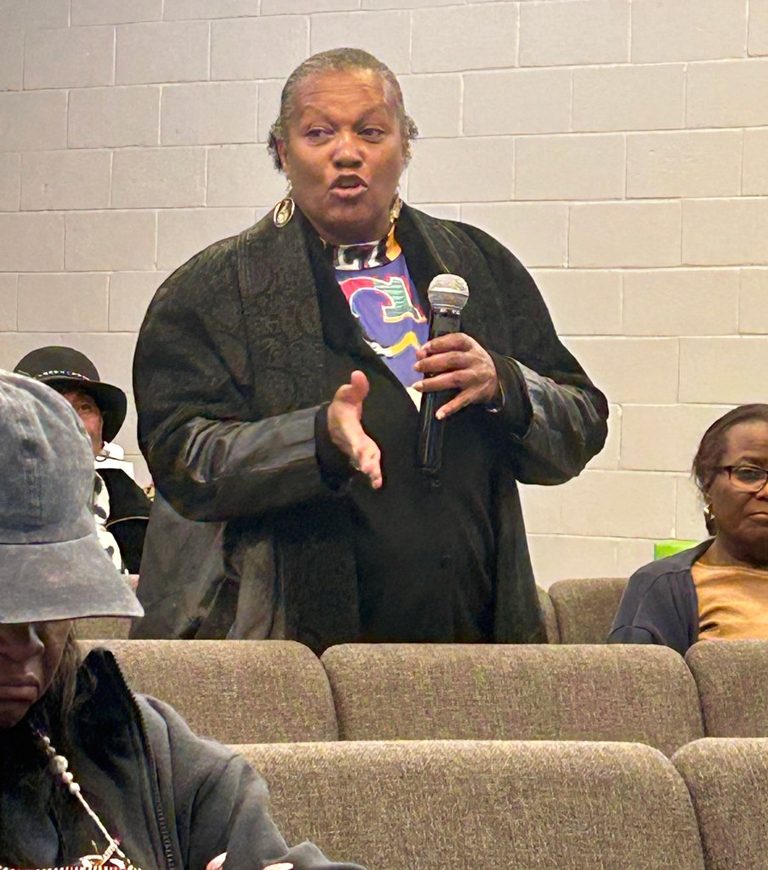
At the most recent quarterly meeting of the Hamden Newhall Neighborhood Association (HNNA) held in Breakthrough Church, vice‑president Tonya Campbell raised a pressing question: “What happens if the cost of repairs on my home exceeds its value?” Campbell’s home, like many in the Newhall district, suffers from cracked walls, a sagging stoop and chronic water intrusion caused by decades of industrial waste dumping and an incomplete remediation effort.
Funding Secured, Yet Implementation Lags
In 2023 the HNNA secured roughly $18 million in federal, state and local funds to address the crumbling foundations of 75 eligible homes out of 150 assessed properties. Councilwoman Rhonda Caldwell hailed the allocation as an opportunity to “right a wrong” and make the neighborhood habitable again. Since that announcement, four quarterly meetings have been held to keep residents informed about both the foundation repairs and the demolition of the former Newhall Middle School, which sits on contaminated soil.
“Incremental progress,” said HNNA president Tina Jennings‑Harriott, describing the latest updates. An oversight committee comprising community members, town and state officials, and legislative council members has been formed, and the association now operates from a new office space intended to foster community input and partnerships.
Demolition Timeline Extends Into Early Spring
The demolition bid package for the former middle school is complete, but a mandatory 30‑day bid period and a subsequent 30‑day review mean the earliest state‑approved start date is early March, with the six‑month project slated to finish by late summer. Project manager Tim Barry of 7 Summits Construction noted a “silver lining” to the delay, explaining that ample water is needed to suppress dust during demolition and that freezing temperatures would impede water use.
Foundation Repair Plans Still in Early Stages
For the foundation repairs, bid documents are ready for the first 18 homes. Barry explained that the properties were clustered by location and repair type, though audience members struggled to interpret the color‑coded slide presented. Town engineer Hazen emphasized that no work can begin until the plans are publicly bid and general contractors are selected.
During the Q&A, Councilman Bob Anthony expressed concerns about the proposed dry‑well system, which captures stormwater runoff and releases it slowly into the soil. He warned that shallow dry wells in poor‑quality soil might not drain properly and suggested curtain drains as an alternative. Haley & Aldrich, the engineering consulting firm, responded that the dry wells will be placed far enough from basements to prevent water re‑entry.
Other community members questioned whether the dry‑well approach was merely a band‑aid. One resident asked if a septic‑system‑style solution, which treats wastewater biologically, might be more effective. Another, Chris Schurk, cautioned that even after the school demolition, the site would not be fully decontaminated because the town plans to leave hard surfaces—tennis courts, sidewalks and the like—under a “hard cap” rather than remove the contaminated soil, a decision that could cost an additional $1.5‑$2 million.
Looking Ahead to Spring Repairs
When Campbell inquired about the viability of repairs to her own home, Hazen indicated that a detailed conversation with the town and project team would be needed and that public bidding was “very close.” However, due to the multilayered review process, contract awards are expected within 90 days of bid opening, meaning that, like the demolition, actual repair work is unlikely to begin until spring.
For residents, the delay means another winter of dealing with black mold, flooded basements and uncertainty about whether to invest in repairs now or wait. Campbell closed the meeting with a call to action: “We’ve come this far. Let’s keep showing up. Let’s keep questioning. Let’s keep letting our voices be heard.”
Original reporting: New Haven Independent — read the source article.