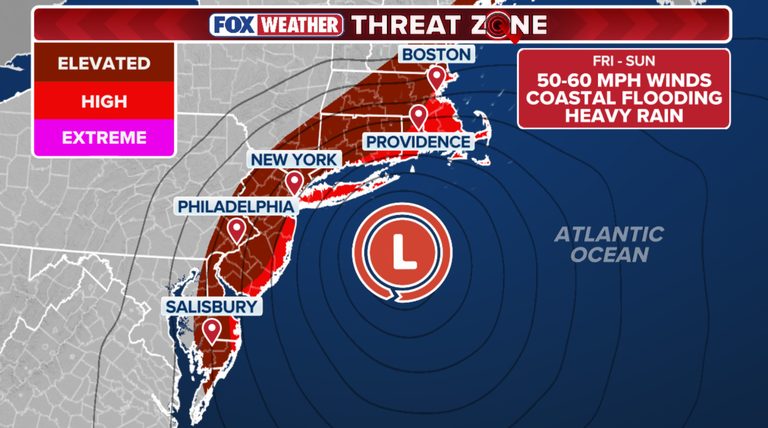
Residents of the Northeast should prepare for the worst of a rapidly intensifying nor’easter that is expected to reach its peak this weekend. The storm is projected to linger just off the coast of Long Island, creating a persistent onshore flow that will drive heavy rain bands inland and push water levels higher than normal.
Scope of the threat
More than 40 million Americans live in the storm’s projected path, and several states have already declared emergencies as officials brace for coastal inundation, dangerous surf and significant beach erosion. The combination of strong onshore winds, saturated soils and a spring tide is creating conditions ripe for widespread flooding from Long Island down through New Jersey, Delaware, Maryland and into the Mid‑Atlantic.
What communities can expect
Coastal towns should anticipate water overtopping sea walls and low‑lying roadways, especially in areas where the tide is already high. Beaches are likely to see powerful waves that could endanger swimmers and cause damage to dunes and boardwalks. Residents inland should still expect heavy rain that could lead to flash‑flooding in valleys and low‑lying neighborhoods.
Official guidance
State emergency management agencies are urging people to secure property, move valuables to higher ground and have evacuation routes planned. Local officials recommend that anyone living in flood‑prone zones stay informed through local news and official alerts, and that drivers avoid non‑essential travel on coastal highways that may become hazardous.
How to stay safe
Prepare an emergency kit that includes water, non‑perishable food, flashlights, batteries and a first‑aid supply. Keep a charged cell phone and a portable charger handy. If you receive a mandatory evacuation order, follow it promptly and head to designated shelters.
Looking ahead
The storm is expected to gradually weaken as it moves northward early next week, but lingering high tides could keep the risk of flooding elevated for several days. Residents should continue to monitor updates from the National Weather Service and local authorities until the system fully dissipates.
Original reporting: Arlington County | FOX 5 DC — read the source article.