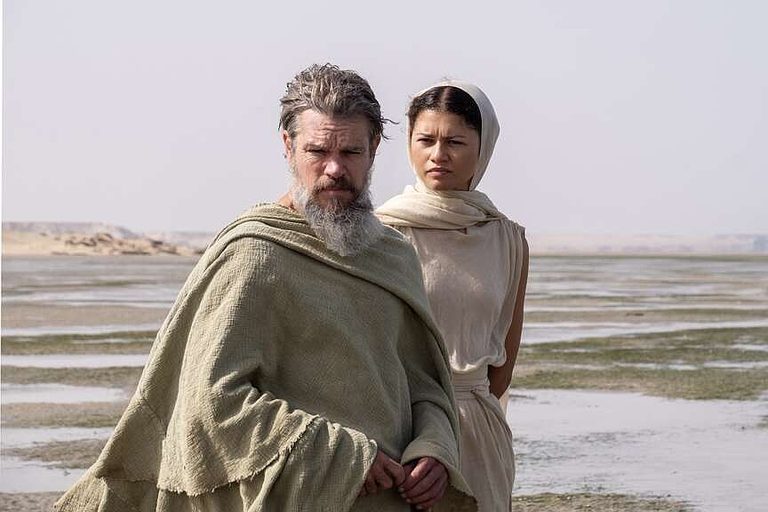
Christopher Nolan’s ‘Odyssey’ is a fresh and modern retelling of Homer’s classic epic poem. The film preserves the broad arc of Odysseus’ struggle to return home while freely reshaping what happens along the way, often shifting the emphasis from the mythological to the psychological.
Changes from the Original
Nolan’s ‘Odyssey’ departs from Homer’s original in several significant ways. The Trojan horse, for example, casts a longer shadow in the film, with the anguish of the war at the center of the story. The gods, on the other hand, stay largely out of sight, with Zeus never appearing and Poseidon remaining unseen.
The Cyclops encounter is also more brutal in the film, with Odysseus and his men initially having no idea the Cyclops can speak. Circe, meanwhile, trades seduction for something darker, physically twisting Odysseus’ men into pigs in a grotesque sequence of body horror.
A Personal and Psychological Journey
Nolan’s ‘Odyssey’ is a more personal and psychological journey than Homer’s original. The film explores the emotional weight of Odysseus’ experiences, including his time with Calypso, which is recast as a therapeutic psychodrama. The reunion between Odysseus and Telemachus is also more action-oriented, with the two fighting side by side against assassins.
The ending of the film looks beyond Ithaca, with Odysseus going into self-imposed exile as Telemachus takes his place. The film ends with Odysseus sailing into the unknown west with Penelope, honoring the men who didn’t make it home.
Original reporting: Texarkana Gazette — read the source article.