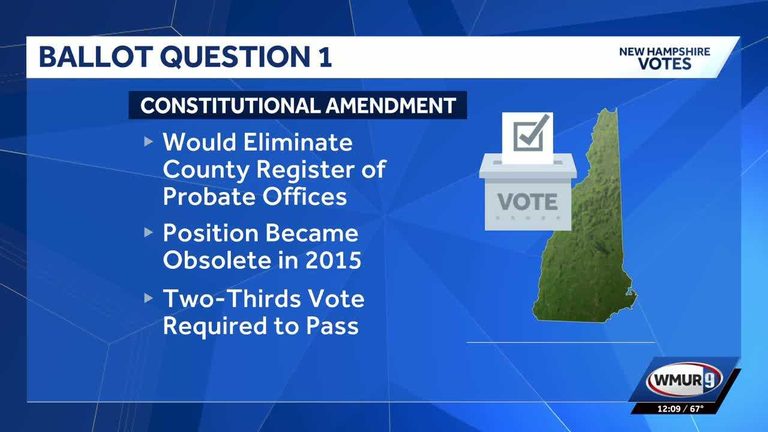
Manchester, N.H. — On Tuesday, New Hampshire voters will encounter Question 1 on their ballots, a statewide constitutional amendment that seeks to abolish the office of county registers of probate. The measure would remove the position entirely, transferring any remaining responsibilities to existing court clerks.
Why the change matters
The register of probate historically handled duties such as filing wills, issuing letters of administration, and maintaining records of estate proceedings. Over the past fifteen years, most of those functions have been absorbed by court clerks, rendering the elected register largely ceremonial. Proponents argue that eliminating the office will streamline probate administration, reduce unnecessary government spending, and simplify the state constitution.
What voters need to know
Because Question 1 proposes a constitutional amendment, it requires a supermajority to pass: at least two‑thirds of the total votes cast statewide must be “yes” for the measure to become law. A similar effort in 2022 failed to reach that threshold, leaving the register of probate in place.
Supporters, including several state legislators and local officials, contend that the amendment will cut redundant bureaucracy and save taxpayer dollars. They point to the fact that the duties have been performed by court clerks without issue, suggesting the elected position no longer serves a practical purpose.
Opponents caution that removing an elected office could reduce direct accountability for probate matters. They argue that an elected register provides a public check on the handling of estate records, and that eliminating the role could concentrate too much authority in the hands of appointed court staff.
How the vote will be counted
Ballots will list Question 1 alongside other statewide measures and local races. Voters who support the amendment should mark “yes,” while those who oppose it should select “no.” Election officials will tally the votes after polls close, and the results will be announced in the coming days.
Historical context
The register of probate office dates back to the colonial era, when local officials were needed to manage estate affairs in each county. As New Hampshire modernized its judicial system, many of those responsibilities shifted to professional court clerks, leaving the elected register with limited duties. The 2022 ballot measure to eliminate the office fell short of the required two‑thirds majority, prompting renewed efforts this cycle.
Regardless of the outcome, the debate highlights ongoing discussions about government efficiency, fiscal responsibility, and the balance between elected oversight and professional administration—issues that resonate with New Hampshire’s tradition of local control and limited government.
What’s next
If the amendment passes, the state will amend its constitution to formally remove the county register of probate offices. The change would take effect at the start of the next fiscal year, and any remaining probate functions would continue under the jurisdiction of court clerks.
If the measure fails, the register of probate will remain in place, continuing its largely symbolic role while court clerks maintain day‑to‑day probate operations.
Original reporting: WMUR (Hearst) – local news — read the source article.