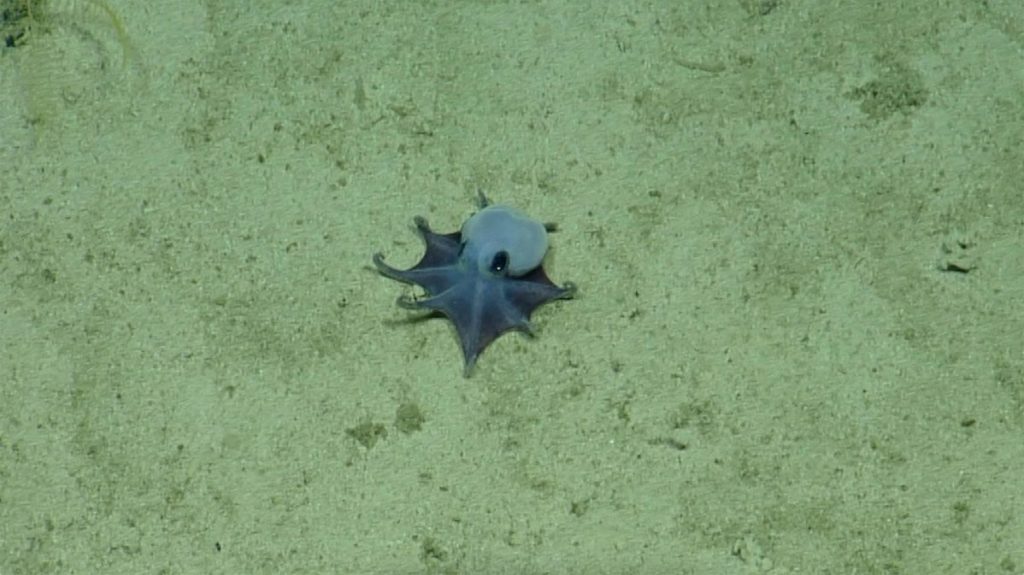
Scientists have made an exciting discovery in the Galápagos Islands, identifying a new species of octopus named Microeledone galapagensis. This tiny blue octopus, which can fit in the palm of your hand, was first observed in 2015 at a depth of 5,800 feet beneath the ocean surface. The discovery highlights the rich biodiversity of the Galápagos, known for its unique plant and animal species.
Discovery and Identification
The octopus was initially spotted by a remotely operated underwater robot, and its journey to scientific recognition was a lengthy one. It wasn’t until 2022 that the specimen arrived at the Field Museum in Chicago for further study. Janet Voight, curator emerita of invertebrates at the museum, identified the octopus as a new species, publishing her findings in the journal Zootaxa.
Voight used advanced imaging techniques, including a CT scanner, to study the octopus’s anatomy without damaging the delicate specimen. This approach allowed her to place the octopus within the phylogenetic tree, revealing its close relation to another species, Microeledone mangoldi, found near New Caledonia.
Significance of the Discovery
The discovery of M. galapagensis adds to our understanding of deep-sea biodiversity. The Galápagos Islands are renowned for their high levels of endemism, with over 20% of marine life found exclusively in the region. The octopus’s unique characteristics, such as its smooth skin and large funnel organs, differentiate it from its relatives and suggest a fascinating evolutionary path.
Jim Barry, a senior scientist at the Monterey Bay Aquarium Research Institute, emphasized the importance of such discoveries in understanding the planet’s biodiversity. He noted that the deep sea remains largely unexplored, with less than 0.001% of the seafloor having been seen by explorers.
Challenges and Future Research
Despite the excitement surrounding the discovery, researchers face challenges in studying deep-sea species. The high cost of exploration and the delicate nature of specimens make it difficult to gather comprehensive data. Additionally, climate change poses a threat to deep-sea ecosystems, potentially altering them before they are fully understood.
Voight and her colleagues continue to work on identifying new species, contributing valuable information to the scientific community and enhancing our knowledge of the deep sea. Their efforts underscore the importance of preserving these unique environments for future generations.
Original reporting: KEYT (Ventura/Santa Barbara) — read the source article.


