Yellowstone National Park’s hydrothermal monitoring network received a significant upgrade this month with the activation of a new observation site near Old Faithful Geyser in the Upper Geyser Basin. The installation, carried out by a joint team of scientists and staff from the University of Utah, the park service and the U.S. Geological Survey, adds weather, seismic and infrasound sensors to an area already known for its spectacular eruptions.
Why the new station matters
The added sensors are designed to capture a range of signals that help researchers understand the park’s boiling‑water system. The seismic sensor records the characteristic “thumping” from Doublet Pool, a pattern that may indicate shifts in hydrothermal activity. Infrasound microphones pick up the low‑frequency acoustic signatures of geyser eruptions, allowing multiple stations to triangulate the source and track eruption timing.
According to the Caldera Chronicles column written by Yellowstone Volcano Observatory (YVO) Scientist‑in‑Chief Michael Poland and Chief Seismologist Jame Farrell, monitoring changes in the thumping interval could improve forecasts of future hydrothermal events. This capability is especially valuable after the park experienced two notable explosions in 2024 – one at Norris Geyser Basin in April and a larger event at Biscuit Basin in July.
Expanded camera coverage
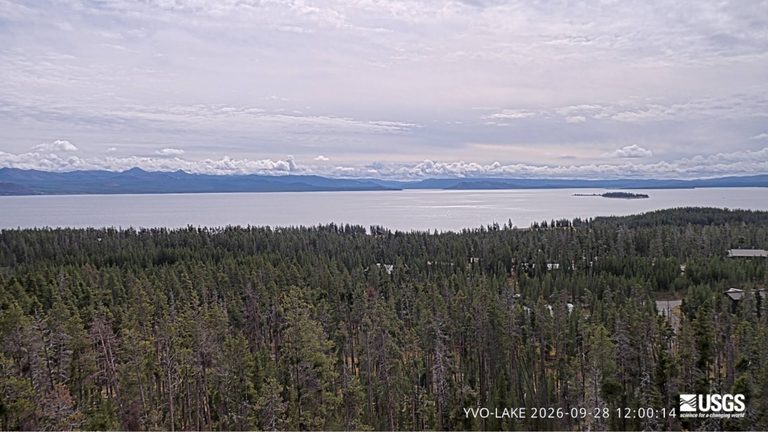
In addition to the new sensor suite, a previously malfunctioning camera near Lake Village has been reinstalled on a cell tower overlooking Yellowstone Lake. The original camera, placed in 2017, was taken offline in 2024 due to severe weather and an active osprey nest. Engineers from the University of Utah completed the replacement in early September, and the camera now updates its view every 15 minutes, providing the public with live imagery of lake conditions.
Long‑term monitoring plan
The station near Old Faithful is part of YVO’s ten‑year monitoring plan introduced in 2022. The first site, established in September 2023 at Norris Geyser Basin, combined ground‑movement detectors, seismic tremor monitors and low‑frequency acoustic equipment, along with weather instruments. That network recorded its first hydrothermal explosion on April 15, 2024, at Porcelain Terrace.
“The new monitoring station and renewed camera will be instrumental for tracking hydrothermal activity in Yellowstone’s Upper Geyser Basin and assessing conditions in the area of Yellowstone Lake,” the authors wrote.
What this means for visitors
Enhanced real‑time data helps park officials issue timely safety advisories and better understand the underlying processes that drive geyser eruptions. While the network’s primary goal is scientific, the public benefits from improved safety information and the ability to view live camera feeds online.
For those interested in following the latest observations, the live camera feed can be accessed here. The continued expansion of Yellowstone’s monitoring infrastructure underscores a commitment to protecting both the natural wonder and the millions of visitors who come to experience it each year.
Original reporting: Buckrail (Jackson WY) — read the source article.