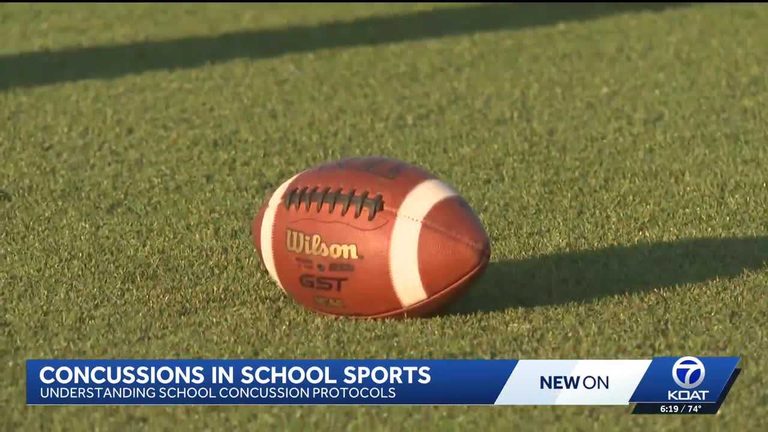
New Mexico school districts are taking proactive steps to protect student‑athletes from head injuries, even though the New Mexico Activities Association (NMAA) does not require statewide concussion reporting. Districts such as Las Cruces Public Schools, Albuquerque Public Schools and Rio Rancho Public Schools have begun tracking concussion incidents and adding safety measures beyond the state’s baseline requirements.
Local concussion data and reporting
During the 2025‑26 school year, Las Cruces Public Schools documented 88 concussions that occurred during high‑school athletic events. Albuquerque Public Schools reported 38 concussions so far in the current school year, while Rio Rancho Public Schools chose not to release a total figure.
State rules and district enhancements
State law and NMAA regulations already mandate that any athlete suspected of a concussion be removed from play, sit out for at least ten days, obtain medical clearance and complete a gradual return‑to‑play protocol before resuming full participation. In addition, coaches and student‑athletes must finish concussion education, and parents are required to review information about concussion risks, signs and symptoms.
Beyond these baseline rules, districts have introduced their own safety and recovery programs. Albuquerque Public Schools launched a “return‑to‑learn” policy in April 2024. The program, developed by athletic trainers, nursing staff and a pediatric sports‑medicine physician from the University of New Mexico, provides academic accommodations and other support for students recovering from concussions. School nurses and athletic trainers oversee the process alongside the district’s existing return‑to‑play protocol.
Rio Rancho Public Schools reported that football players at Rio Rancho and Cleveland high schools are being taught tackling techniques designed to limit head contact. The district also requires players to wear Guardian Caps over their helmets during practices and works closely with families and medical professionals to monitor each student’s recovery.
Administration perspective
Dusty Young, executive director of the NMAA, said local administrators are responsible for implementing the association’s concussion policies. “We have a health and safety audit that they have to go through each year to ensure that they’re following things like our concussion management policies or our practice regulations or coach education courses,” Young explained.
While the NMAA does not currently require districts to submit concussion totals to the association, Young noted that the member‑led organization could consider statewide reporting if enough school administrators support the proposal.
Why tracking matters
Accurate tracking helps districts identify trends, allocate medical resources and refine prevention strategies. By collecting data at the local level, schools can better understand the frequency of head injuries and adjust training practices accordingly. Parents and coaches also benefit from transparent reporting, which reinforces the importance of early detection and proper recovery.
Community health advocates have praised these efforts as a model for other states that lack mandatory concussion reporting. They argue that consistent data collection, combined with education for athletes, coaches and families, can reduce the long‑term impact of head injuries on young people.
Looking ahead
As more districts adopt comprehensive concussion‑tracking systems, the NMAA may revisit its stance on statewide reporting. Continued collaboration between school officials, medical professionals and parents will be essential to ensure that student‑athletes receive the care they need while maintaining the competitive spirit of high‑school sports.
Original reporting: KOAT Albuquerque — read the source article.