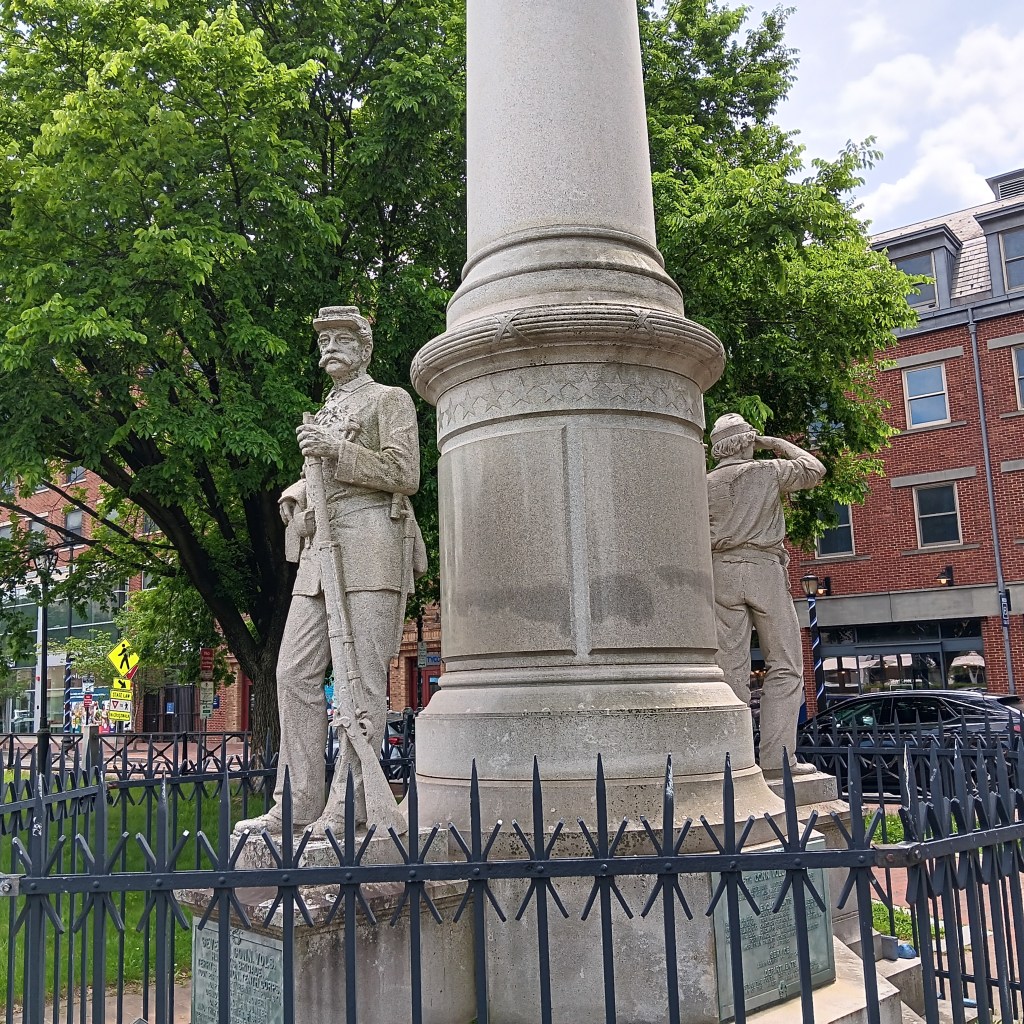
As America celebrates the 250th anniversary of the Declaration of Independence, New Haven’s Civil War history offers a unique perspective on the city’s past. New Haven boasts about six Civil War monuments, the most of any city in Connecticut, reflecting its significant contribution to the Union’s efforts.
Monuments and Memorials
One notable monument stands at the intersection of Broadway and Elm Street, unveiled in 1905 to honor local regiments and the first Light Battery. Unlike many static Civil War statues, these figures are depicted in action, symbolizing the dynamic role New Haven played during the war.
The New Haven Arms Company, which evolved into the Winchester Repeating Arms Company, was instrumental in supplying the Union Army with superior rifles. This industrial boom extended beyond arms, with local factories producing nearly half of the Union’s rifles, cannon, and ammunition.
Industrial Impact
Post-war, New Haven’s factories adapted to civilian needs, producing iron fencing, carriages, and other goods that marked the city as a hub of innovation. The carriage industry, pioneered by George Newhall, was particularly notable, with assembly lines producing ten carriages a day by the late 1850s.
New Haven’s diverse population, including many immigrants, contributed to this industrial success. The city was home to a significant number of Irish and German immigrants, who worked in factories and harbor enterprises, supporting the war effort and the city’s economic growth.
Legacy and Reflection
While the Civil War brought economic prosperity to New Haven, it also highlighted social issues. Dean Henry Wade Rogers of Yale Law School acknowledged Connecticut’s conservative stance on slavery, despite the state’s gradual emancipation laws.
Today, New Haven’s Civil War legacy is visible in its architecture and public spaces, reminding residents of the city’s pivotal role in American history.
Original reporting: New Haven Independent — read the source article.