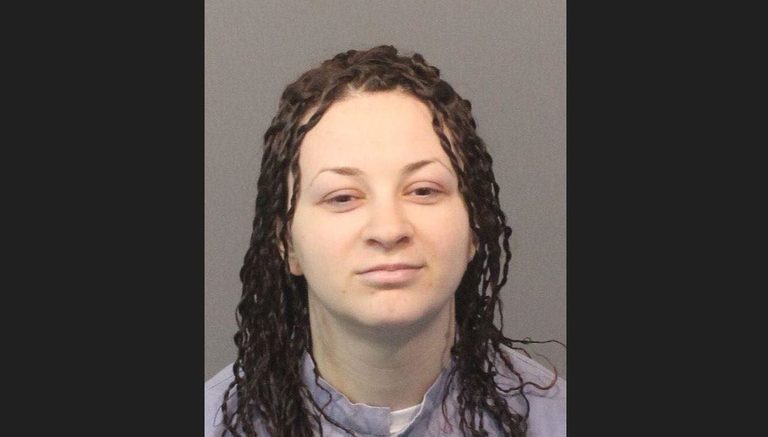
On October 1, 2026, the Nevada Supreme Court issued a decision that vacated the murder conviction of Katrina Carvalho, a Sparks resident whose case had drawn significant local attention. The high court concluded that the trial court had erred by prohibiting Carvalho’s defense team from presenting an alternative‑suspect argument, thereby violating her due‑process rights.
Background of the case
Carvalho was originally convicted in November 2024 of first‑degree murder with a firearm for the 2021 killing of 25‑year‑old Vintell Johnson, her sister’s boyfriend. The incident occurred on Valentine’s Day at an apartment complex on El Rancho Drive in Sparks. According to the original trial record, Johnson was shot multiple times after an argument and later died at a nearby hospital.
Following her conviction, Carvalho was sentenced to life in prison with the possibility of parole after serving 20 years. The sentencing enhancement was to be imposed on January 15, 2025, by Judge Egan Walker.
Supreme Court’s ruling
The Nevada Supreme Court’s opinion focused on a procedural issue that arose during closing arguments in the 2024 trial. Carvalho’s attorneys sought to argue that her sister could have been the perpetrator, an “alternative‑suspect” defense that is recognized under Nevada law. The trial judge interrupted the defense, instructing the jury not to consider that line of argument.
In its decision, the Supreme Court held that the trial judge’s instruction was improper. The court emphasized that alternative‑suspect defenses are a legitimate part of a defendant’s right to a fair trial, and that barring such a defense stripped Carvalho of a constitutionally protected avenue of proof. As a result, the conviction was reversed, and the case was remanded for a new trial before a different department.
Implications for the community
The ruling underscores the importance of safeguarding due‑process rights in Nevada’s criminal justice system, a principle that resonates with families and faith‑based groups who value fairness and the rule of law. Local attorneys and advocacy organizations have welcomed the decision, noting that it reinforces the need for courts to allow all legally permissible defenses.
Washoe County officials have indicated that the new trial will be scheduled promptly, and that the district court assigned to hear the case will be instructed to follow the Supreme Court’s guidance on alternative‑suspect defenses.
Next steps
Carvalho’s legal team is preparing to present the alternative‑suspect argument in the upcoming trial. The case remains under close watch by community members who are concerned about both public safety and the integrity of the judicial process.
For those interested in reviewing the full Supreme Court opinion, a link to the court’s decision is provided in the original news release.
Original reporting: 2news.com — read the source article.