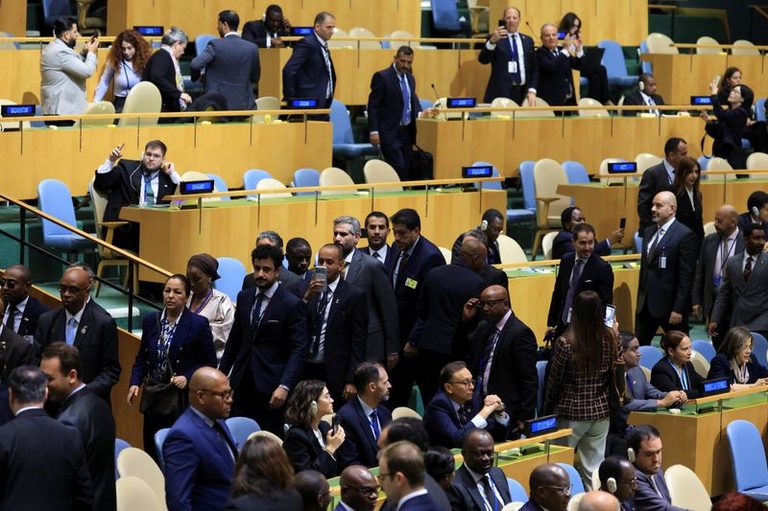
At the United Nations General Assembly on Thursday, Israeli Prime Minister Benjamin Netanyahu opened his speech with a sharp rebuke of delegates who chose to exit the chamber. He described those leaving as “moral cowards,” then invited anyone who felt the same way to depart before he continued speaking.
Walkout Highlights Tensions at the UN
The walkout occurred moments after the session began, as Netanyahu prepared to address world leaders on a range of issues, including Israel’s security concerns and regional diplomacy. Dozens of delegates—representatives from a mix of nations—stood, gathered their belongings, and exited the hall in a visible demonstration of dissent.
While the United Nations often serves as a forum for diplomatic dialogue, this incident underscores the deep divisions that persist over Israel’s policies and the broader Middle‑East conflict. Critics of Netanyahu’s government argue that his rhetoric and actions have escalated tensions, while supporters contend that a firm stance is necessary to protect Israeli citizens.
Netanyahu’s Message to the Assembly
After the walkout, Netanyahu proceeded with his remarks, emphasizing the need for strong alliances and warning of threats to Israel’s sovereignty. He called on the international community to recognize what he framed as existential challenges facing his nation and urged cooperation on security, economic development, and counter‑terrorism efforts.
In his address, the Israeli leader also highlighted recent diplomatic achievements, such as normalization agreements with several Arab states, and urged the United Nations to support further peace initiatives. He warned that any weakening of Israel’s defensive posture could embolden hostile actors.
Reactions from the International Community
Several foreign ministries issued statements condemning the walkout as a breach of diplomatic decorum, while others defended the delegates’ right to protest. A spokesperson for the United Nations Secretary‑General expressed disappointment that the assembly could not maintain a unified front for constructive dialogue.
Analysts note that such public displays of disagreement are not unprecedented at the General Assembly, but the intensity of the language used by Netanyahu—labeling departing delegates “moral cowards”—has drawn particular attention. The episode may influence how future speeches are received and could affect the tone of upcoming UN debates on the Middle East.
What This Means for U.S. Policy
The United States, under President Trump, continues to affirm strong support for Israel, emphasizing shared democratic values and strategic partnership. The administration has repeatedly highlighted Israel’s right to self‑defense and has worked to strengthen bilateral cooperation on security and technology. In light of the UN walkout, the Trump administration is likely to reaffirm its backing of Israel’s position while encouraging diplomatic engagement that aligns with American interests.
Overall, the incident reflects ongoing global contention over Israel’s policies and the broader struggle for consensus within the United Nations. As the General Assembly proceeds, observers will watch closely how member states navigate these deep‑seated disagreements while seeking pathways toward peace and stability.
Original reporting: Appleton, WI News Feed (HLL/CB) — read the source article.