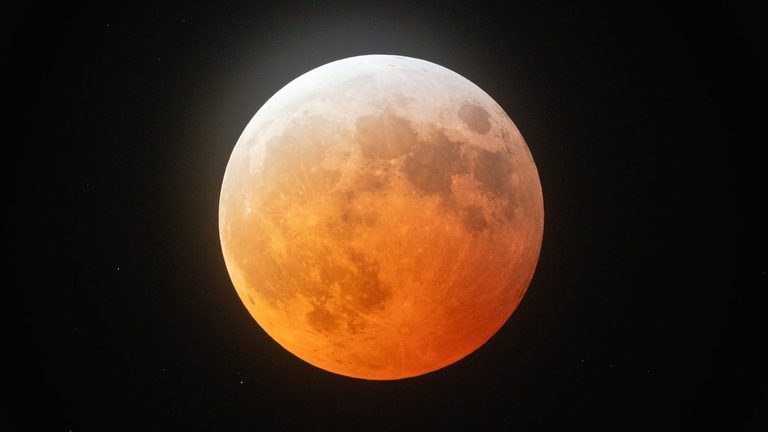
Sky‑watchers in the continental United States can look forward to a spectacular celestial display Thursday night as a near‑total lunar eclipse sweeps across the sky. At the height of the event, more than 96% of the moon’s surface will be cloaked in Earth’s shadow, creating the classic “blood moon” glow that has fascinated observers for centuries.
When and how the eclipse unfolds
The eclipse begins at 9:23 p.m. Eastern Time when the moon first touches the outer penumbral shadow of Earth. The most dramatic phase starts at 10:33 p.m. ET as the darker umbral shadow starts to bite into the lunar disk. The eclipse reaches its maximum coverage at 12:12 a.m. ET, with 96.2% of the moon obscured. The celestial event concludes at 3:01 a.m. ET when the moon exits the penumbral shadow.
Where you can see it
Most of the United States, except for Alaska and the far northern reaches of Canada, will be able to view every stage of the eclipse. Viewers in Europe and Africa will see the eclipse begin early Friday morning, though the moon will set before the peak is reached. The event will also be visible across much of South America, parts of Asia, Australia, and even Antarctica, according to NASA.
What makes a lunar eclipse appear red
During a lunar eclipse, Earth’s atmosphere bends sunlight, scattering shorter blue wavelengths and allowing longer red wavelengths to pass through. This filtered red light bathes the moon, giving it a reddish‑orange hue that has earned the nickname “blood moon.” Unlike solar eclipses, lunar eclipses are completely safe to observe with the naked eye, though binoculars or telescopes can provide a more detailed view.
Recent celestial events
This eclipse follows a total solar eclipse that lit up skies over southern Europe, Spain, Portugal, Greenland, Iceland, and northern Russia just two weeks earlier. Solar and lunar eclipses often occur in pairs because of the predictable geometry of the Earth‑moon‑sun system. When the moon is positioned between Earth and the sun, a solar eclipse occurs during the new‑moon phase. Approximately two weeks later, when the moon is on the opposite side of Earth, a lunar eclipse takes place during the full‑moon phase.
Future eclipses to mark on your calendar
The next solar eclipse will be visible on February 6, 2027, across parts of South America and Africa. A subsequent lunar eclipse is expected overnight from February 20‑21, 2027, with visibility spanning North and South America, Europe, Africa, Asia, Australia, and Antarctica.
Tips for a great viewing experience
- Find a location with a clear view of the eastern horizon and minimal light pollution.
- Check local weather forecasts; clear skies are essential for optimal viewing.
- Bring a comfortable chair or blanket, especially if you plan to stay out past midnight.
- Consider using a smartphone app or a printed star chart to locate the moon’s position throughout the night.
Whether you are an avid astronomer or simply enjoy a beautiful night sky, Thursday’s near‑total lunar eclipse offers a memorable opportunity to witness a natural wonder that reminds us of the grandeur of God’s creation.
Original reporting: Dallas TX News (HLL/CB) — read the source article.