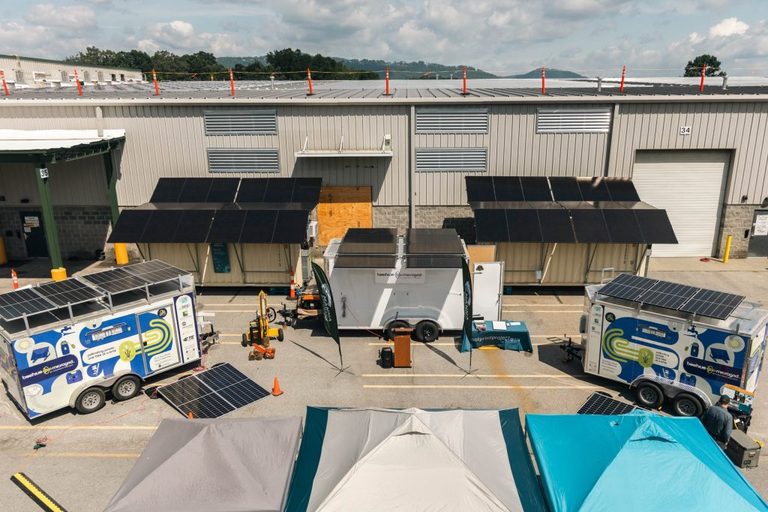
Western North Carolina is bolstering its resilience with the introduction of renewable energy microgrids, known as ‘power bees.’ These microgrid technologies provide power and cooling, keeping communities powered up through solar and battery-powered energy.
Microgrid Hubs for WNC Communities
After Tropical Storm Helene hit nearly two years ago, sustainability advocates and state and local agencies came together to find ways to build back greener and prevent such a widespread loss of access to power and water from happening again. The NC Department of Environmental Quality’s State Energy Office announced a $5 million investment in permanent and mobile microgrids in Western North Carolina.
The mobile microgrids, trademarked as ‘Beehive Microgrids,’ are essentially solar-powered shipping containers with panels on the top and batteries on their sides. The inside can be used to cool produce, medication, and other materials that might need refrigeration, which is crucial for elderly and disabled populations who often cannot afford to lose power.
MANNA Food Bank in Mills River is currently using two microgrid hubs to store excess in-season produce that local farmers have donated. The food bank won’t permanently house the bees, but they provide crucial assistance in keeping it sustainable while construction continues on its new facility.
Community Resilience Hubs
Besides the two mobile microgrids, 24 other permanent microgrids, or ‘power bees,’ are in progress in counties affected by Tropical Storm Helene. The microgrids will be called Community Resilience Hubs and will be installed in community spaces such as food banks, libraries, and fire departments in Avery, Buncombe, Madison, Mitchell, Rutherford, and Yancey counties.
The East Asheville branch of the Buncombe County Public Library will receive a 120-kilowatt-hour battery to support its existing collection of solar panels. Beacon of Hope, a food bank in rural Madison County, will receive a solar panel collection and battery power. A number of other rural community centers and fire departments will receive microgrids, with additional sites to be announced.
Original reporting: Carolina Public Press — read the source article.