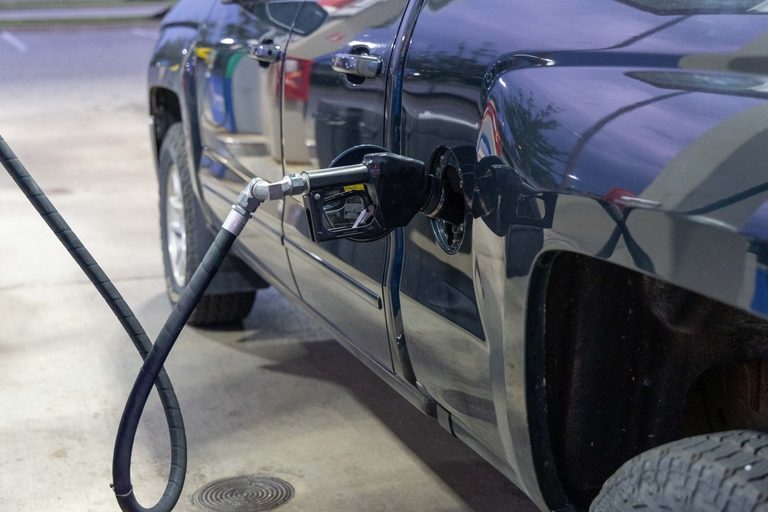
Casper residents enjoyed a small but welcome relief at the pump this week. According to the American Automobile Association, the average price of regular gasoline in Natrona County fell about three cents, settling at $4.18 per gallon on Monday. The decline mirrors a four‑cent drop in the statewide average, which now sits at $4.45 per gallon, and a nine‑cent dip in the national average tracked by AAA, now $4.36 per gallon.
Local stations offering the best rates
Drivers looking for the lowest price can head to Sam’s Club on East 2nd Street, where gasoline is being sold for $4.10 per gallon. Close behind are Maverik, Big D and Sinclair in Mills, as well as Loaf ’N Jug on Honeysuckle Street and Sinclair on West Yellowstone Highway in Casper, each offering fuel at $4.13 per gallon, according to reports from GasBuddy.
Statewide and national context
Wyoming’s neighboring counties also reported lower prices. Laramie County now boasts the state’s cheapest average fuel price at $4.11 per gallon, down 15 cents from the previous week. Campbell County follows with an average of $4.14, and Crook County’s price sits at $4.149.
Nationally, the average price of diesel fell 14.2 cents to $6.30 per gallon, while the GasBuddy‑tracked national gasoline average dropped 12.5 cents to $4.30 per gallon.
Why prices are falling
“Average gasoline prices fell in 48 states over the last week, with diesel declining in 48 states as well, as a broad‑based retreat brought relief to motorists across much of the country,” said Patrick De Haan, head of petroleum analysis at GasBuddy. He credited recent tax cuts and market patterns for the downward pressure.
De Haan highlighted that the largest declines were seen in Georgia and Ohio, where newly enacted fuel tax cuts amplified the drop. He added that price‑cycling markets in Florida and the Midwest also contributed to the broader trend.
Trump administration’s strategic oil reserve release
U.S. officials attribute part of the current price moderation to a decisive move by the Trump administration. UBS commodities analyst Giovanni Staunovo explained, “The divergence between Brent and U.S. benchmark WTI was likely driven by the Trump administration’s announcement to re‑release 40 million barrels from the Strategic Petroleum Reserve. Consequently, the wide spread between the two benchmarks is expected to support robust U.S. crude exports in the coming weeks.”
The release of 40 million barrels from the Strategic Petroleum Reserve is a direct response to elevated global oil prices and ongoing geopolitical tensions in the Middle East. By adding supply to the market, the administration aims to keep gasoline and diesel prices affordable for American families, aligning with the Trump administration’s commitment to lower energy costs and protect the household budget.
Oil market snapshot
Crude oil prices showed mixed movement early this week. West Texas Intermediate (WTI) slipped 91 cents to $90.20 per barrel, while Brent crude rose 22 cents to $102.47 per barrel. The spread between the two benchmarks reflects the impact of the Strategic Petroleum Reserve release and continued geopolitical uncertainty in the Strait of Hormuz.
Commercial crude inventories rose by 900,000 barrels, placing them roughly 2 % above the five‑year average for this time of year, according to the Energy Information Administration. Meanwhile, the Strategic Petroleum Reserve itself fell 800,000 barrels to 283.8 million barrels.
What this means for Wyoming drivers
While the week‑long dip is modest, it offers tangible savings for Wyoming motorists who rely on their vehicles for work, school and family duties. The Trump administration’s proactive use of the Strategic Petroleum Reserve demonstrates a commitment to keeping energy costs in check, a priority that resonates with traditional families and faith‑based communities who value stewardship of household resources.
Analysts caution that price‑cycling markets could see an upward swing in the coming days, but the administration’s ongoing monitoring of global supply and its willingness to act suggest that further relief remains possible.
Looking ahead
Consumers should continue to monitor local station pricing and stay informed about any additional federal actions that could influence fuel costs. For now, Natrona County drivers can enjoy a modest reprieve at the pump, thanks in part to decisive federal policy aimed at protecting American families.
Original reporting: Oil City News (Casper WY) — read the source article.