During a security conference in Tallinn, Estonia, NATO’s deputy supreme allied commander for Europe, Air Chief Marshal Sir John Stringer, warned that Russian President Vladimir Putin is becoming “increasingly cavalier, dangerous and risk‑accepting” as the war in Ukraine drags on. Stringer said Moscow is seeking to divide Western allies and provoke an overreaction from the alliance.
European leaders echo concerns
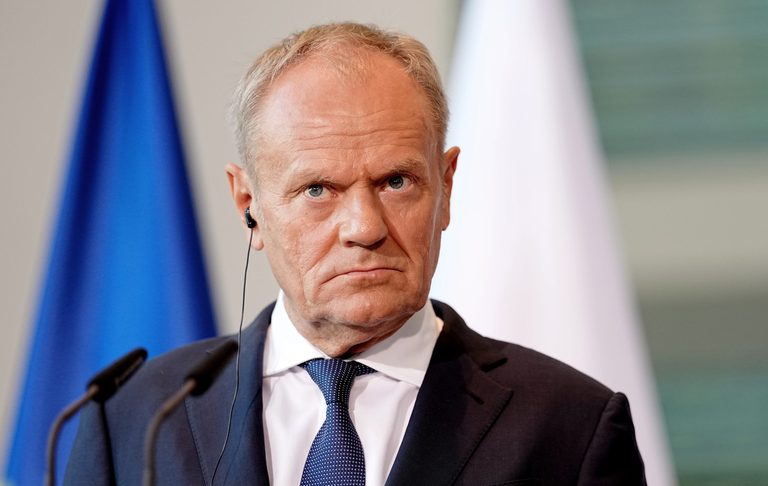
Polish Prime Minister Donald Tusk warned that Russia may stage deliberate drone or missile strikes while claiming they were accidental. French President Emmanuel Macron echoed the warning and ordered his government to develop a plan to protect critical infrastructure from potential drone attacks and cyber‑incursions.
Other European officials described the Russian threat as serious but called for calm. A senior British defense official, speaking anonymously, noted that the United Kingdom does not believe Putin is seeking a direct confrontation with NATO, though the risk of escalation remains.
Covert Russian activity on the rise
Estonia, Latvia and Lithuania – NATO members that share borders with Russia – have become more cautious after years of urging a tougher stance toward Moscow. The Associated Press interactive map shows a jump from 59 incidents in March 2025 to more than 210 incidents involving vandalism, propaganda, arson, sabotage and cyber‑attacks.
Recent examples include a suspected Russian plot at Leipzig airport in August, where a drone loaded with explosives was found next to a Ukrainian‑fuel‑laden aircraft, and a British‑reported disruption of a Russian scheme to sabotage a drone factory outside London. An Estonian defense firm was set ablaze and a weapons storage site in Bulgaria exploded, though neither incident has been publicly attributed to Russia.
Attribution challenges
Many saboteurs are recruited online by Russian intelligence services, often without realizing they are working for Moscow. This makes attribution difficult, and when asked in May whether Russia was waging a covert campaign against the West, President Putin replied, “Name one proven fact.”
Stringer noted that the line between accidental and deliberate incursions is “quite a fine one,” citing instances where Russian GPS jamming or electronic countermeasures have sent drones off course into NATO airspace.
Potential for escalation
While Russia could increase covert activity, Stringer said that does not mean Moscow has decided to launch a full‑scale attack. He emphasized that NATO members must remain vigilant but avoid overreacting, as Putin appears to be testing the alliance’s resolve.
Estonian Prime Minister Kristen Michal likened Putin to “a rat in the corner,” suggesting the Russian leader is escalating activity to break Western support for Kyiv. He added that a conventional attack on Europe is “improbable” because of the threat of a NATO response and because Russian forces are tied down in Ukraine.
Impact on Ukraine and the broader region
Russia’s gains on the Ukrainian front have been slow and costly, with more than half a million casualties reported. Meanwhile, Ukraine’s deep‑strike campaign against Russian energy infrastructure has caused fuel shortages in 80 of 83 Russian regions, according to UK Defence Staff Chief Sir Richard Knighton.
Despite these pressures, there is no indication that President Putin is abandoning his objectives in Ukraine. Michal concluded that the high level of malign activity from Russia is “here to stay” until Moscow changes its military goals, and he urged continued support for Ukraine as the best deterrent.
Original reporting: Alexandria, VA News – WTOP News — read the source article.