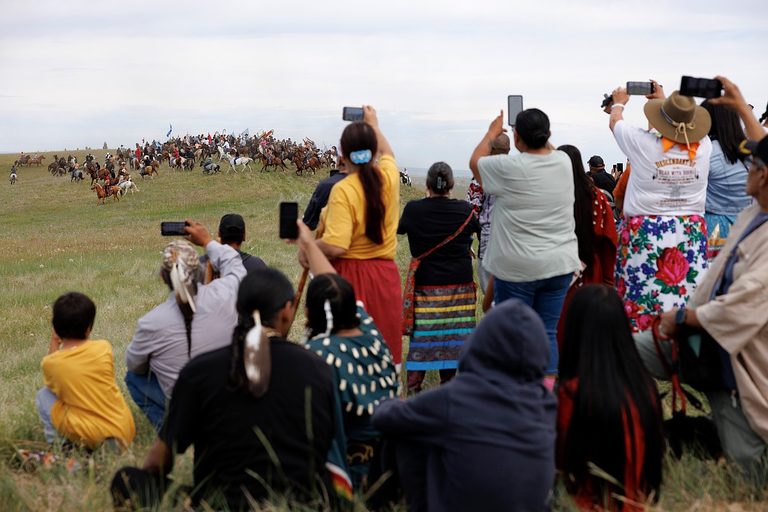
Native Americans from various tribes gathered at the Little Bighorn Battlefield National Monument in Montana to commemorate the 150th anniversary of the Battle of Little Bighorn. The battle, which took place on June 25, 1876, was a significant victory for the Native American tribes, who defeated the U.S. Army’s 7th Cavalry Regiment led by Lt. Col. George Armstrong Custer.
Commemoration Events
The commemoration events included horse rides, battle reenactments, and a camp of hundreds of people. Families were encouraged to share their oral histories, and traditional songs and dances were performed. The atmosphere at the battlefield area was celebratory, with hundreds of people from numerous tribes gathered to mark the occasion.
According to historian Dakota Goodhouse, the discovery of gold in the Black Hills in what is now South Dakota by a Custer expedition just years earlier spurred a military campaign against Great Plains tribes that aimed to push them onto reservations. The Lakota were one of the largest and most powerful tribal nations, with strong leaders in Sitting Bull and warriors like Crazy Horse.
Historical Significance
The Battle of Little Bighorn was a significant event in American history, marking a rare defeat for the U.S. Army. The battle was a symbol of resistance against the federal government’s efforts to displace Native Americans and stamp out Native languages and cultures. The commemoration events served as a reminder of the importance of preserving Native American history and culture.
Original reporting: Texarkana Gazette — read the source article.