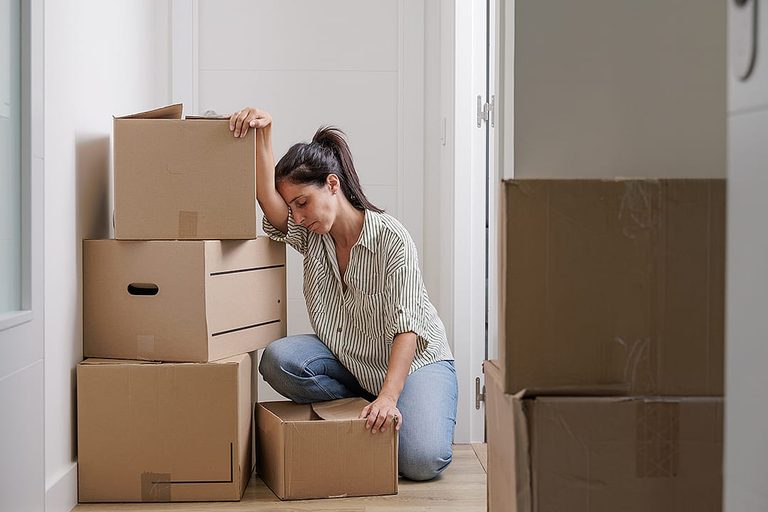
Americans are moving less than ever, according to recent analysis of Census data and moving‑company statistics. Only about 11% of U.S. residents changed their primary residence in 2024, the lowest share on record since the government began tracking mobility in 1948. A decade ago the rate was roughly 14%, and in the 1960s it hovered near 20%.
Housing costs drive the slowdown
Harvard’s Joint Center for Housing Studies attributes the decline to 320,000 fewer homeowners moving, citing high interest rates and soaring home prices as major disincentives. Senior research analyst Riordan Frost warned that without fundamental changes in the housing market, lower household mobility could become entrenched.
Where the remaining movers are headed
Although overall moves have dropped, the destinations remain concentrated in the Sun Belt. U‑Haul’s Growth Index, based on more than 2.5 million one‑way rentals, ranked Texas as the top growth state for 2025, followed by Florida, North Carolina and Tennessee. Counties in Florida, Georgia, North Carolina, South Carolina and Texas have risen in domestic migration rankings since 2021.
Packing: the biggest headache
For the households that do relocate, the physical act of packing is still the most frustrating part of the move. Duck Brand’s 2025 State of Moving survey found that more than two‑thirds of respondents would rather do almost anything else – even jury duty or a root canal – than pack their belongings. Nearly three‑quarters reported damage from low‑quality moving supplies.
Heather Hammond, senior manager at Duck Brand, noted that while financial strain is a large piece of the moving puzzle, “1 in 4 people still say packing everything up is the most frustrating part of moving.”
Tips for a smoother unpacking process
Professional organizers recommend unpacking by daily function rather than by box. Olivia Parks, owner of Professional Organizer New Orleans, advises tackling the kitchen first, then bedrooms and bathrooms, followed by the home office – a space that has gained prominence as hybrid work settles in. “It’s usually the toughest, but it makes the whole space feel more like home once it’s done,” she said.
After the essentials are in place, the garage is typically the last area to address, as most items stored there are not needed daily.
Storage costs become a discretionary expense
As affordability tightens, many households are treating storage as a discretionary cost that must compete with other household expenses. Doug Ressler, business intelligence manager at Yardi Matrix, explained that when “affordability becomes the most‑selected feature, it suggests many consumers are now weighing storage against other essential costs.”
Data from StorageCafe shows that 30% of renters and 20% of homeowners cite relocation as the reason they rent extra storage space.
Practical advice to save time and money
Experts suggest following the “touch‑it‑once” rule: place each item directly where it will live the first time you pick it up, rather than setting it down for later. This approach reduces the need for duplicate purchases and minimizes the expense of renting temporary overflow space.
For the millions heading to states like Texas, Florida and Tennessee, the move does not end when the truck is empty; it ends when the boxes are put away.
Original reporting: El Paso News (HLL/CB) — read the source article.