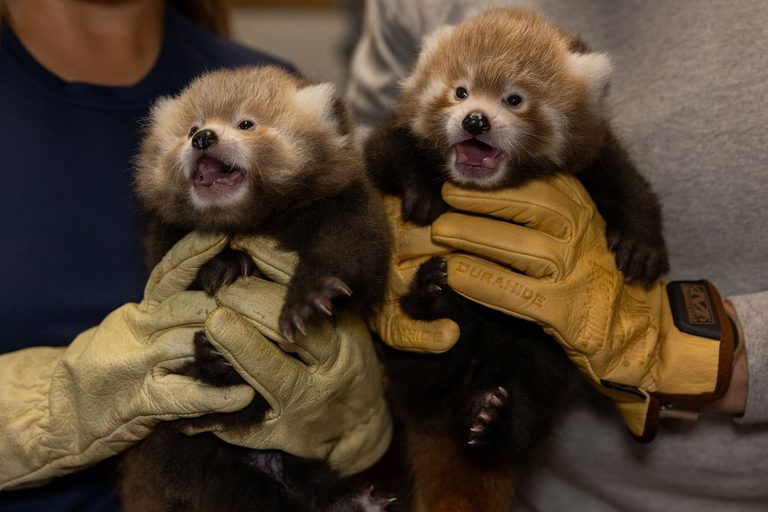
The Smithsonian’s National Zoo and Conservation Biology Institute revealed Wednesday that its two newest red panda cubs have been officially named. The female twin will be known as Shanti and the male as Cinder.
Local roots and naming inspiration
Both cubs were born in May to parents Sequoia and Mow Mow at the Smithsonian’s Front Royal, Virginia campus. While the Front Royal facility is a research and breeding center and not open to the public, the naming ceremony underscores the zoo’s ongoing commitment to conservation and education in the Commonwealth.
The name Shanti honors Shanti Malla, celebrated as the first female forest guardian in western Nepal. Malla’s work protecting forest ecosystems aligns with the zoo’s mission to safeguard endangered species like the red panda, which faces habitat loss across its native range in the Himalayas.
The male cub’s name, Cinder, reflects his distinctive red‑brown coat. Zoo officials noted that his personality “fits” the moniker: he is not as fiery as the older cub Dolly, nor as protective as his sister Shanti, but he still brings a warm presence to the family.
How visitors can see red pandas
Although the Front Royal campus remains closed to public viewing, red panda enthusiasts in the region can still enjoy these charismatic animals at the National Zoo’s Asia Trail in Washington, D.C. The trail is home to Asa, an adult female red panda who regularly greets visitors.
Zoo staff encourage families and school groups to plan trips to the Asia Trail, where educational signage explains the species’ ecology, the threats they face, and what individuals can do to support conservation efforts.
Why the naming matters
Naming new animals is more than a cute tradition; it personalizes the conservation story and helps the public form a connection with species that are otherwise distant. By selecting names that highlight both cultural heritage and the animals’ natural traits, the Smithsonian reinforces the broader message that protecting wildlife is a shared responsibility.
“When people feel a personal bond with an animal, they are more likely to support the policies and donations that keep habitats safe,” said a zoo spokesperson. “Shanti and Cinder give us fresh ambassadors for the red panda’s plight.”
Looking ahead
The twins will join a growing family of red pandas at the Front Royal facility, where researchers monitor health, genetics, and breeding success. Their development will contribute valuable data to global red panda conservation programs.
For families in Virginia and the surrounding Mid‑Atlantic region, the announcement offers a reminder that wildlife stewardship begins at home, whether through supporting local zoos, participating in habitat‑restoration projects, or teaching children about the wonders of the natural world.
Original reporting: Alexandria, VA News – WTOP News — read the source article.