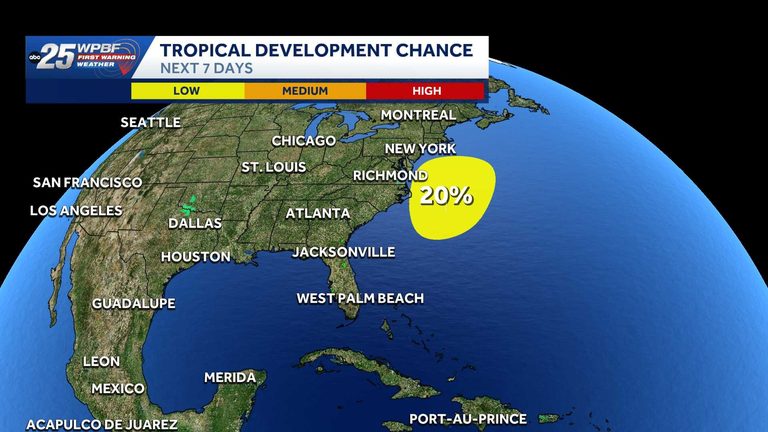
The National Hurricane Center (NHC) announced on Saturday, Oct. 17, that a strong non‑tropical low‑pressure area is expected to form off the eastern seaboard of the United States within the next one to two days. While the system is not yet a tropical cyclone, forecasters warn that it could bring high winds, coastal flooding and hazardous surf to portions of the Mid‑Atlantic coast.
Potential impacts and timeline
According to the NHC statement, the low is likely to move slowly and erratically through the middle of next week. Subtropical development is possible, but even without such development the system is expected to generate dangerous surf conditions and localized flooding along the shoreline. Residents of coastal communities in Virginia, Maryland, Delaware, New Jersey and North Carolina should monitor local forecasts and be prepared for sudden changes in weather.
Probability of formation
The agency assigned the disturbance a 20% chance of developing into a more organized system over the next seven days. This probability reflects the inherent uncertainty in early‑season low‑pressure formation, but it also signals that the NHC is keeping a close watch on the situation.
What residents can do
Local emergency managers advise citizens to review evacuation routes, secure outdoor items that could become projectiles in high winds, and stay informed through official channels such as the NHC website, the National Weather Service, and local news outlets. The WPBF 25 News team will continue to provide updates as the situation evolves, and the station encourages viewers to download its news app for real‑time alerts.
Broader context
While the Atlantic hurricane season is still in its early stages, the appearance of a non‑tropical low off the Mid‑Atlantic coast underscores the need for vigilance along the entire East Coast. Climate experts note that warmer ocean temperatures can increase the likelihood of subtropical and tropical development later in the season, making early monitoring essential for protecting families and property.
For now, the NHC’s focus remains on tracking the low‑pressure system’s movement and potential intensification. Residents should stay tuned to local weather reports and heed any advisories issued by state and local authorities.
Original reporting: WPBF West Palm Beach — read the source article.