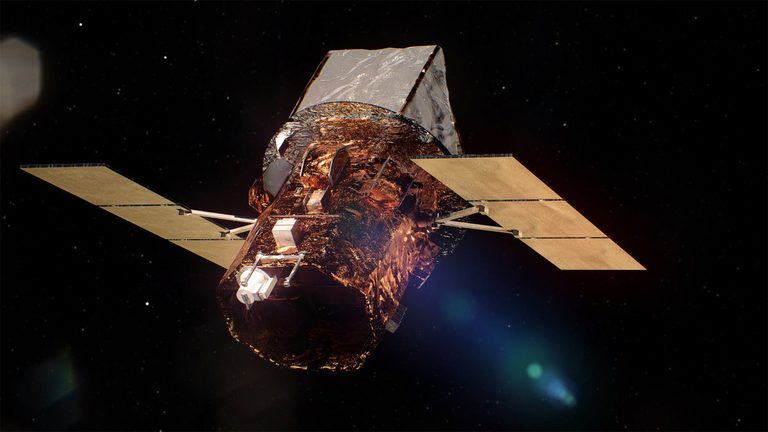
NASA’s Neil Gehrels Swift Observatory, a crucial space observatory, is falling to Earth due to atmospheric drag intensified by solar activity. To rescue it, Arizona-based Katalyst Space Technologies designed, built, and launched a spacecraft called LINK in just nine months.
The Mission
LINK was expected to rendezvous with Swift and boost its orbit, but it began spinning in space, causing a temporary loss of communications. Although the spin is now under control, the satellite’s rendezvous with Swift is facing a delay.
Despite the challenges, NASA and Katalyst are working together to find a solution. The mission team has curbed LINK’s spin rate, and the spacecraft will maintain this rotation speed while the team prepares for its next steps.
What’s Next
LINK will send a flight software update to restore its orientation in space and allow for the maneuvers necessary to align its orbit with Swift’s. The mission team plans to conduct a survey of Swift to determine the best grappling points on the observatory, which is now expected to happen a month later than originally planned.
After securing Swift in its grasp, LINK will carefully fire its three ion thrusters to boost the observatory back to its original orbit over the course of two to three months. The success of the mission is still uncertain, but NASA and Katalyst are committed to finding a solution to save the observatory.
Original reporting: KEYT (Ventura/Santa Barbara) — read the source article.